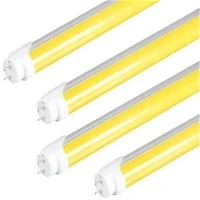
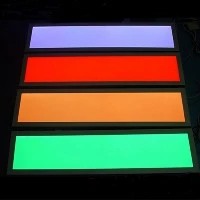
Especially in the production of broilers, the poultry industry is always looking for new and creative ways to maximise growth rates and feed efficiency. LED lighting has drawn interest among new technologies due to its spectrum flexibility, durability, and energy efficiency. A crucial query is raised: Do particular LED light spectrums have a direct impact on the weight gain or growth rates of poultry? This article synthesises results from scientific research and real-world agricultural operations to investigate the relationship between light wavelength, bird biology, and growth performance.
Light's Function in Poultry Farming
A key environmental component of chicken production, light has an impact on productivity, physiology, and behaviour. LEDs are gradually replacing conventional incandescent and fluorescent lights because of their decreased energy usage and adjustable spectrum output. With LED Poultry Lights, farmers may modify wavelengths (colours) to match certain growth objectives, unlike with fixed-spectrum illumination. According to research, the light spectrum affects stress levels, food habits, and hormone secretion-all of which are directly related to growth rates. This article examines the effects of blue, red, green, and white LED spectrums on the growth of chickens and assesses their usefulness.
The Significance of Spectrum in Avian Vision
Unlike humans, who can only see three main colours, chickens can see four: red, green, blue, and ultraviolet. This is known as tetrachromatic vision. They are extremely sensitive to the quality and intensity of light because their eyes have specialised photoreceptors, such as double cones and rods. Important facets of how birds see light include:
Peak Sensitivity: Blue (455 nm) and green (530 nm) wavelengths are the ones that chickens react to the most.
Ultraviolet (UV) Detection: UV light affects social relationships and foraging behaviour.
Flicker Sensitivity: Birds can detect flicker rates as high as 100 Hz, which is far higher than the 60 Hz threshold for humans.
Because of this special visual system, the light spectrum selections made in chicken homes have the potential to either improve or interfere with growth-related natural behaviours.
Blue Light: Improving Muscle Growth and Activity
Numerous studies have examined the stimulating effects of blue light (450–495 nm) in poultry.
Increased Activity: According to a 2017 study published in Poultry Science, broilers exposed to blue LEDs showed 15–20% more activity, which encouraged muscle growth and decreased leg problems.
Feed Intake: Blue light stimulates foraging behaviour by simulating the conditions of dawn. According to trials, broilers in blue-enriched surroundings ingest 8–12% more feed, which speeds up weight increase.
Hormonal Regulation: By inhibiting melatonin synthesis, blue wavelengths extend eating and alertness times during the day.
Balanced photoperiods are necessary since extended exposure to strong blue light may increase stress indicators.
Red Light: Weight Gain and Calming Effects
Red light (620–750 nm) is linked to better feed conversion rates (FCR) and serenity:
Stress Reduction: By reducing cortisol levels, red light reduces aggressive behaviours like pecking at feathers. Red-lit broilers had death rates that were 10–15% lower, according to a 2020 research published in Animals.
Enhanced FCR: According to research from the University of Arkansas, broilers raised in red light gained 5–7% more weight with the same amount of feed. This is probably because they used less energy to react to stress.
Red light has a more noticeable effect on broiler development, but it also boosts reproductive hormones in breeders.
Green Light: Harmonising Welfare and Growth
Poultry's visual peak sensitivity nearly corresponds with green light (495–570 nm):
Natural Behaviour Promotion: By enhancing leg health and spatial awareness, green wavelengths promote exploratory behaviour.
Moderate Growth Effects: Green light is a "baseline" choice for welfare-focused systems since studies reveal that it has no effect on growth rates when compared to blue or red light.
UV Supplementation: Some methods boost vitamin D production by combining UV-A and green LEDs, which indirectly aids in bone formation.
White Light: Tunable vs. Conventional Systems
The spectrum makeup of white LED systems varies:
Cool White (5000–6500K): A high blue component increases activity but runs the danger of overstimulation by simulating the noon sun.
Warm White (2700–3000K): More red and orange encourages composure but may cause feed intake to decrease.
Tunable White LEDs: With the help of sophisticated technology, farmers may dynamically change the colour temperature to maximise growth stages (warm white for rest, cold white for daytime activity, etc.).
Photoperiod and Light Intensity: Complementary Elements
Duration and intensity affect the impact of the light spectrum:
Dim lighting (5–10 lux): Lowers tension but may make it harder to see the broadcast. Perfect for periods of rest.
Bright Lighting (20–30 lux): Blue or white light improves eating activity.
Photoperiod Management: 16–20 hours of light each day are ideal for broilers. The immune system and the release of melatonin depend on intermittent darkness.
Useful Implementations for Farmers
Broiler Production: Use red light during rest periods to lower stress and blue light during feeding times (14–16 hours).
Layer Pullets: To promote consistent development without causing early sexual maturity, use green or white light.
Cost-Benefit: LEDs have payback periods of less than two years and can save energy expenses by 60–80% when compared to incandescent lamps.
Issues and Things to Think About
Overstimulation Risk: Too much blue light might lead to bone problems or hyperactivity.
UV Dependency: Standard LEDs' lack of UV-A may require dietary vitamin D supplements.
Farm-Specific Calibration: Breed, housing density, and climate all affect ideal spectra.
Future Paths
New technologies offer real-time modifications depending on health data or bird behaviour, such as smart LEDs with IoT sensors. Further investigation into pulsed illumination regimes and spectrums coordinated with circadian rhythms may improve growth results.
Poultry development rates and weight gain are unquestionably influenced by specific LED light spectrums, with blue and red wavelengths providing the greatest advantages for broilers. Red light improves serenity and metabolic efficiency, whereas blue light stimulates activity and feed intake. Success, however, necessitates a comprehensive strategy that balances flock health and operating expenses with spectrum, intensity, and photoperiod. Poultry breeders might have previously unheard-of control over growth optimisation as LED technology advances, combining animal welfare and production.