Do yellow light bulbs really keep bugs away?
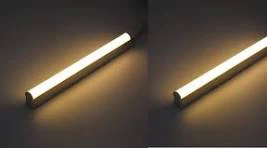
When it comes to protecting yourself from flying insects during warm evenings, homeowners, campers, and other people who like being outside have been turning to yellow light bulbs as a popular cure for decades. The concept is straightforward: simply replace a typical white bulb with a yellow bulb, and all of a sudden, insects like mosquitoes, moths, and gnats will avoid the area. This will make porches, patios, and gardens more fun to interact with. On the other hand, does this prevalent practice hold up under the scrutiny of science? Are yellow light bulbs actually effective in warding off insects, or is the concept that they do so more of a fiction than a reality? In order to provide an answer to this issue, we need to investigate the biology of insect vision, the physics of light, and the findings of scientific research that have put this age-old notion to the test.
To begin, it is completely necessary to have an understanding of how insects see light. The majority of insects have compound eyes, which contain photoreceptors that are sensitive to multiple wavelengths. This is in contrast to humans, who have three distinct types of photoreceptors (cones) in their eyes, which allow us to see a wide range of colors, from red to violet. Research has demonstrated that a large number of flying insects, particularly those that are active at twilight or night, such as mosquitoes, moths, and flies, are highly drawn to shorter wavelengths of light. These shorter wavelengths correspond to the blue, violet, and ultraviolet (UV) regions of the spectrum. These wavelengths are more intense and are typically linked with sunlight, moonlight, or other natural light sources that insects utilize for navigation, mating, or finding food sources like flowers (which reflect UV light to attract pollinators). However, these wavelengths are also connected with other natural light sources.
Longer wavelengths, on the other hand, such as those falling within the yellow, orange, and red regions of the electromagnetic spectrum, are either less visible to many insects or less appealing to them. The reason for this is because their photoreceptors are not as sensitive to longer wavelengths as those of other organisms. Yellow light, which has a wavelength that is roughly 570–590 nanometers, is not within the range that many insects find to be the most pleasant. Because yellow light bulbs emit light mostly in the yellow spectrum, they limit the amount of blue or ultraviolet light that would normally attract insects, hence reducing the number of insects that are present. This biological difference is the foundation for the assertion that yellow light bulbs may repel insects.
The question is, where did this concept come from, and how has it been implemented in the real world? Since at least the middle of the 20th century, people have been using yellow lights as a means of warding off insects. Researchers and professionals in the field of pest management began experimenting with colored lights in the 1950s and 1960s as a means of reducing the number of insects that were drawn to domestic and agricultural areas, as well as outdoor areas. Yellow bulbs, which were sometimes referred to as "bug lights," were commercially accessible and were sold as a straightforward and alternative to the use of chemicals to address pest issues.
The effectiveness of these bulbs was initially supported by anecdotal evidence which appeared to be positive. There were less insects found in the vicinity of yellow lights, according to a number of persons, in comparison to ordinary white or incandescent bulbs. When considering the information that was known about the visual capabilities of insects, this discovery made perfect sense: if insects are less sensitive to yellow light, then they should be less likely to be drawn to it. In spite of this, a more complex image presented itself as the scope of scientific inquiry on the subject broadened.
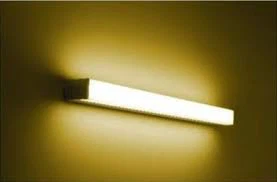
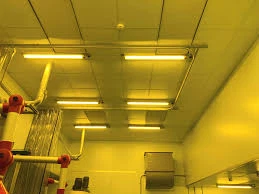
The type of bulb that is being utilized is a significant reason that makes the problem more complicated. There is a wide range of light that is emitted by conventional incandescent bulbs. This light includes a substantial amount of blue and ultraviolet wavelengths, both of which are extremely appealing to insects. In order to function, yellow incandescent bulbs filter out shorter wavelengths, resulting in the mostly yellow light that is produced. Despite the fact that this filtering does lessen the attractiveness of insects, it also decreases the brightness and efficiency of the bulb.
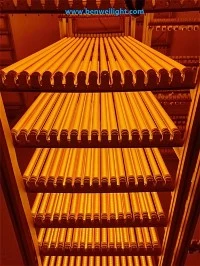
LED bulbs, on the other hand, may be made to emit particular wavelengths of light without the need for filters as traditional light bulbs do. It is common practice for LED "bug lights" to be constructed to emit light in the yellow or amber spectrum, with a small amount of blue or ultraviolet light. In average, LED bug lights are more successful than regular incandescent bulbs when it comes to minimizing the amount of insects that are drawn to them, according to studies that compared the two types of bulbs. For instance, a study that was conducted in 2016 and published in the Journal of Medical Entomology. The researchers investigated a variety of light sources and discovered that LED bulbs that generate yellow light attracted a considerably lower number of mosquitoes compared to incandescent lamps or LEDs that emit white light.
However, even among yellow bulbs, there is a certain degree of diversity in their efficiency. It is important to consider the precise wavelength of yellow light. Certain bulbs generate light that is closer to the green or orange spectrum, which may be more or less appealing to particular insects. The level of brightness of the light also plays a part in the equation. Despite the fact that it emits mostly yellow wavelengths, a very bright yellow bulb may still attract certain insects. This is simply due to the fact that the bulb's total brightness is increased.
The species of bug is yet another essential factor to take into account. The method in which insects react to light varies from species to species. By way of illustration, mosquitoes are highly drawn to blue and ultraviolet light, which means that yellow bulbs are more likely to be effective in preventing their presence. In a similar manner, moths, who are both nocturnal and drawn to light, are less receptive to wavelengths that originate from the yellow spectrum. Certain varieties of beetles and flies, on the other hand, may be less impacted by the color of the light and more drawn to other elements, such as heat, wetness, or food sources. There are also other insects that may be less affected by the color of the light. On the other hand, this indicates that yellow bulbs, despite the fact that they could lower the number of mosquitoes or moths in a region, would not have much of an effect on other kinds of insects.
There is also the possibility that the efficiency of the bulb is affected by the setting in which it is utilized. If there are other sources of light in the vicinity, such as streetlights, porch lights from neighboring houses, or even the glow from a smartphone or television, these may attract insects regardless of the hue of the bulb that is being discussed. The presence of people, who release carbon dioxide and body heat, which mosquitoes use to identify hosts, or standing water, which acts as a breeding ground for mosquitoes, are two examples of elements that might attract insects to a particular location. Insects may also be brought to an area by factors that are not linked to light. In situations like these, a yellow bulb might not be enough to deter insects from entering the area since the insects are drawn to the other indications that are there.
Research conducted in the scientific community has also brought to light the shortcomings of yellow light bulbs. In a study that was carried out in 2005, researchers from the University of Florida examined and evaluated a number of different kinds of insect lights. These bulbs included yellow incandescent bulbs, yellow compact fluorescent lamps (CFLs), and LED bulbs alike. According to the findings of the study, yellow bulbs did attract a less number of insects compared to white bulbs; however, they did not completely repel insects. When compared to other means of pest control, such as screens or insect repellents, the difference in the number of insects that were attracted was quite minor in certain instances. This was especially true when compared to the techniques that were used.
In a second study that was published in the journal PLOS ONE in 2017, researchers evaluated the attractiveness of different insects to different types of light sources. These light sources included standard incandescent bulbs, yellow LEDs, and white LEDs. Despite the fact that yellow LEDs were the least appealing to the majority of insects, the researchers discovered that they were still able to attract a few individuals, particularly in situations when there were no other light sources present. Certain insect species, such as certain types of flies, exhibited minimal preference between yellow and white light, which suggests that yellow bulbs are not a universal answer. This was one of the findings of the study.
It is also important to note that "bug lights" are sometimes mistaken with "repellent" lights; nevertheless, there is a significant distinction between the two: yellow bulbs do not actively repel insects; rather, they attract fewer insects by producing wavelengths that are less enticing to them. In other words, if insects are already present in the region for other reasons, a yellow bulb will not be able to drive them away. Instead, it will only reduce the likelihood of attracting a greater number of insects to the area.
So, what does this mean for those who own their own homes and anybody else who is interested in reducing the amount of insect activity surrounding their outside spaces? Yellow light bulbs are not a cure-all, but they may be a helpful aid in some situations. When used in conjunction with other tactics, they have the potential to assist in lowering the quantity of insects that are drawn to a certain location. The use of a yellow LED bulb in a porch light, combined with the screening of doors and windows, the removal of standing water, and the application of insect repellent while going outside, can help to create an atmosphere that is less prone to the presence of insects.
On the other hand, it is essential to adequately manage expectations. The efficiency of yellow bulbs to eradicate insects will vary based on the type of bug, the habitat, and the particular bulb that is used. Yellow bulbs will not succeed in eliminating all insects. In regions that have a large number of insect populations, it may be important to take additional precautions. To supplement the usage of yellow bulbs, for instance, it may be necessary to use the services of a professional pest control company or to set up mosquito traps.
One further thing to take into account is the trade-off between the quality of the light and the attractiveness of insects. The yellow light has a warmer, more amber hue, which some people find less appealing than the brilliant, white light of conventional bulbs or white LEDs. Yellow light is distinguished by its warmer, more amber hue. There are some activities that need strong visibility, such as reading or cooking outside, and the yellow light that is dimmer may be less suitable for those activities. In situations like these, it may be essential to make a compromise, such as employing a yellow bulb for general illumination and a white bulb with a higher level of brightness for specialized activities when they are required.
The advancements that have been made in LED technology in recent years have resulted in the creation of light bulbs that produce light in particular wavelengths that are meant to reduce the amount of insects that are attracted to them while still giving a bright and high-quality light. The light that these bulbs generate is often in the red or orange spectrum, which is even less appealing to insects than the yellow spectrum, although it is still visible to humans. In spite of the fact that these bulbs may be more expensive than the conventional yellow bug lights, they provide a more optimal balance between visibility and the prevention of insect infestation.
Although yellow light bulbs have the potential to minimize the amount of insects that are drawn to a certain location, it is important to note that they are not a perfect solution. It is because of the biology of insect vision that they are successful. Many insects are less sensitive to longer wavelengths of light, such as yellow, and as a result, they are less likely to be lured to yellow bulbs in comparison to bulbs that emit blue or ultraviolet light. On the other hand, their success is contingent upon a number of circumstances, including the type of bulb used, the particular wavelength of light that is emitted, the kind of bug that is being seen, and the habitat.
Yellow bulbs, when incorporated into an all-encompassing pest management approach, have the potential to be an effective and chemical-free tool that may make outdoor areas more delightful to spend time in. When used in conjunction with other preventative methods, such as removing breeding grounds, installing screens, and using insect repellent, they deliver the greatest level of effectiveness. As is the case with any technique of pest management, it is essential to have a thorough understanding of their limits and to select the appropriate bulb for the particular circumstance.
Do yellow light bulbs, in fact, deter insects from entering the room? To some degree, but not completely, is the response to this question. They are able to lessen the attraction that insects have to them, but they cannot completely turn them off. The use of a yellow bulb is a start in the right direction for individuals who are wanting to reduce the amount of insect activity; nevertheless, it should not be depended upon as the only option.
https://www.benweilight.com/lighting-tube-bulb/uv-anti-t8-led-tube-light.html
Together, we make it better.
Shenzhen Benwei Lighting Technology Co.,Ltd
Mobile/Whatsapp :(+86)18673599565
Email:bwzm15@benweilighting.com
Skype: benweilight88
Web: www.benweilight.com
Add:F Building,Yuanfen Industrial Zone,Longhua,Bao'an District,Shenzhen, China