LED Stadium Lights: Balancing Illumination, Efficiency, and Insect Impact
Stadiums, with their towering floodlights illuminating fields, tracks, and arenas, are iconic symbols of nighttime sports and entertainment. For decades, these structures relied on traditional lighting technologies such as metal halide or high-pressure sodium (HPS) bulbs to deliver the intense brightness needed for players, spectators, and broadcast cameras. However, in recent years, light-emitting diode (LED) technology has revolutionized stadium lighting, offering benefits like energy efficiency, longer lifespans, and superior light quality. Yet, as with any shift in lighting systems, questions have emerged about their broader environmental impact-including how LED stadium lights interact with insects, which play critical roles in ecosystems as pollinators, prey, and decomposers. This article explores the unique characteristics of LED stadium lights, their effects on insect behavior and populations, and the strategies being used to mitigate potential ecological disruptions.


To understand the relationship between LED stadium lights and insects, it is first necessary to grasp how these lights differ from their predecessors. Traditional metal halide bulbs emit a broad spectrum of light, including significant amounts of blue and ultraviolet (UV) wavelengths, which are highly visible and attractive to many insects. HPS bulbs, while more energy-efficient than metal halides, produce a yellow-orange glow with fewer blue or UV components, making them somewhat less appealing to insects but often less effective at providing the crisp, white light needed for high-definition broadcasts.
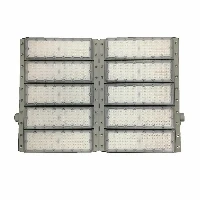
LED stadium lights, by contrast, are highly customizable. Manufacturers can design LEDs to emit specific wavelengths, allowing stadium operators to tailor the light spectrum to meet the needs of sports (e.g., reducing glare for players), broadcasting (e.g., ensuring accurate color representation), and energy conservation. Most modern LED stadium systems emit a cool white light, which includes a higher proportion of blue wavelengths than HPS bulbs but can be adjusted to minimize UV output. This ability to fine-tune the light spectrum is key to understanding their impact on insects, as different wavelengths trigger distinct behavioral responses in these creatures.
Insects rely on light for a variety of essential behaviors, from navigation and mating to foraging and predator avoidance. Many nocturnal insects, such as moths, beetles, and certain species of bees, use celestial light sources like the moon and stars to orient themselves. Artificial lights can disrupt this navigation by creating "light pollution"-a phenomenon where man-made light overwhelms natural light cues, causing insects to become disoriented, trapped, or diverted from their intended paths. For example, moths are famously drawn to bright lights, a behavior known as positive phototaxis, which can lead them to abandon their search for food or mates and instead circle light sources until exhaustion or predation.
The specific wavelengths emitted by LED stadium lights play a critical role in determining their attractiveness to insects. Studies have shown that blue and UV wavelengths are particularly alluring to many insect species. A 2018 study published in Nature Communications found that LED lights emitting high levels of blue light attracted up to five times more insects than LEDs with reduced blue output or traditional HPS bulbs. This is because many insects have photoreceptors highly sensitive to these shorter wavelengths, which they associate with sunlight or flowering plants (which often reflect UV light to attract pollinators).
Stadiums, with their massive, high-intensity LED arrays, can act as powerful insect magnets. The sheer brightness of these lights-often exceeding 100,000 lumens-can draw insects from significant distances, disrupting local ecosystems in several ways. First, large aggregations of insects around stadium lights can lead to increased predation: birds, bats, and other insectivores may be drawn to the area, altering their foraging patterns and potentially depleting insect populations in surrounding habitats. Second, insects that are diverted from their natural behaviors (e.g., pollinating plants or preying on pests) may fail to fulfill their ecological roles, affecting plant reproduction, crop yields, or the balance of predator-prey relationships. Third, some insects, such as certain species of bees and butterflies, are active during twilight hours and may be disturbed by stadium lights that remain on after sunset, disrupting their ability to return to nests or complete daily foraging cycles.
The impact of LED stadium lights on insect populations is not uniform across all species. Nocturnal insects that are strongly attracted to blue light, such as moths and some beetles, are more likely to be affected than diurnal species or those with lower sensitivity to blue wavelengths. Pollinators, which are crucial for 75% of global food crops, are a particular concern. While honeybees are primarily active during the day, some native bee species and butterflies are crepuscular (active at dawn or dusk) and may be disrupted by stadium lights that illuminate nearby gardens, parks, or natural habitats. A 2020 study in Environmental Pollution found that LED lighting near agricultural areas reduced nighttime pollination by moths, leading to lower seed production in certain plants-a trend that could have cascading effects on food webs.
Another factor influencing the ecological impact of LED stadium lights is their duration and timing. Unlike residential or commercial lights, which may be turned off after business hours, stadium lights are often illuminated for extended periods during evening and night games, concerts, or events. This prolonged exposure can create persistent disruptions to insect behavior, as insects may be unable to escape the light's influence or may alter their activity patterns to avoid it. For example, some insects may shift their foraging or mating times to avoid bright areas, potentially reducing their chances of survival or reproduction.
Despite these challenges, LED technology offers unique opportunities to mitigate the impact of stadium lights on insects. Unlike traditional bulbs, which have fixed spectra, LEDs can be adjusted to reduce or eliminate wavelengths that are most attractive to insects. For instance, stadium operators can opt for "warm white" LEDs, which emit more yellow and red wavelengths and fewer blue ones, thereby reducing their attractiveness to moths, mosquitoes, and other light-sensitive insects. A 2021 study by researchers at the University of Exeter found that modifying LED stadium lights to emit less blue light reduced insect attraction by up to 30%, with no significant loss in light quality for sports or broadcasting.
Another strategy is the use of motion sensors or dimming systems. Many stadiums are lit for hours before and after events, even when no activity is occurring. By dimming lights during inactive periods or using sensors to brighten them only when needed, operators can reduce overall light pollution and minimize insect disruption. This approach not only benefits insects but also reduces energy consumption-a key advantage given that stadium lighting can account for up to 40% of a facility's total energy use.
Light shielding and directionality are also important considerations. Traditional stadium lights often emit light in all directions, including upward into the night sky, where it can scatter and affect insects over a wide area. LED fixtures, however, can be designed with precise optics that focus light downward onto the playing field, reducing upward "sky glow" and limiting light spillage into surrounding habitats. By containing light to the stadium itself, operators can prevent insects from being drawn from nearby ecosystems, preserving their natural behaviors and roles.
In addition to technological adjustments, stadiums can implement ecological planning to offset their impact on insects. For example, creating "pollinator gardens" around stadium perimeters-planted with native flowers that bloom at different times of the year-can provide food and habitat for insects, helping to counteract any disruptions caused by lighting. Some stadiums have also partnered with local conservation groups to monitor insect populations before and after lighting upgrades, allowing them to adjust strategies based on real-world data.
The economic benefits of LED stadium lights further support these ecological efforts. While the initial cost of LED fixtures is higher than that of traditional bulbs, their longer lifespan (up to 100,000 hours compared to 10,000–20,000 hours for metal halides) and lower energy consumption result in significant cost savings over time. These savings can be reinvested into sustainability initiatives, such as installing insect-friendly lighting adjustments or funding local conservation projects. For example, the Mercedes-Benz Stadium in Atlanta, which switched to LED lighting in 2017, reduced its energy usage by 60% and used part of the savings to fund urban gardening programs that support pollinators.
It is also important to recognize that the impact of LED stadium lights on insects is part of a larger issue of light pollution, which affects ecosystems worldwide. According to the American Association for the Advancement of Science, light pollution has increased by 2% per year globally since the 1970s, disrupting not only insects but also birds, bats, and other wildlife. By adopting insect-friendly LED lighting practices, stadiums can serve as models for reducing light pollution in urban areas, demonstrating that high-performance lighting and ecological responsibility are not mutually exclusive.
However, challenges remain. Balancing the needs of sports broadcasting, which often requires specific light spectra and intensities, with insect conservation can be a complex task. For example, some broadcasters prefer cool white light for its ability to render colors accurately on camera, which may conflict with the goal of reducing blue wavelengths. To address this, manufacturers are developing advanced LED systems that can switch between different spectra-using a more insect-friendly spectrum during inactive periods and a broadcast-optimized spectrum during events. This flexibility allows stadiums to meet multiple needs without compromising on performance or ecology.
Another challenge is the lack of long-term data on the effects of LED stadium lights on insect populations. While short-term studies have shown reduced attraction with modified spectra, the long-term consequences-such as changes in insect reproduction, migration patterns, or species diversity-are still being researched. This highlights the need for ongoing monitoring and collaboration between stadium operators, ecologists, and lighting manufacturers to refine best practices.
In conclusion, LED stadium lights represent a significant advancement in lighting technology, offering improved efficiency, versatility, and performance for sports and entertainment venues. Their impact on insects, while not without challenges, is manageable through careful design and strategic adjustments. By customizing light spectra to reduce blue and UV wavelengths, using directional lighting to minimize spillage, and implementing smart controls to limit unnecessary illumination, stadiums can significantly reduce their attractiveness to insects and preserve ecological balance.
Moreover, these efforts align with broader trends toward sustainability in sports and urban planning, demonstrating that large-scale facilities can coexist harmoniously with natural ecosystems. As LED technology continues to evolve, and as our understanding of insect behavior deepens, stadiums have the potential to become leaders in responsible lighting practices-proving that even the brightest lights can shine without overshadowing the needs of the natural world.
Ultimately, the goal is not to eliminate stadium lighting but to find a balance: one that allows athletes to compete, fans to cheer, and insects to thrive. With thoughtful design and a commitment to ecological stewardship, LED stadium lights can light the way toward a more sustainable future for both sports and the environment.
https://www.benweilight.com/lighting-tube-bulb/best-led-flood-lights-stadium-lights.html
Together, we make it better.
Shenzhen Benwei Lighting Technology Co.,Ltd
Mobile/Whatsapp :(+86)18673599565
Email:bwzm15@benweilighting.com
Skype: benweilight88
Web: www.benweilight.com
Add:F Building,Yuanfen Industrial Zone,Longhua,Bao'an District,Shenzhen, China