When it comes to LED lighting, a common question asked by many people is, "How do I know if a ballast is compatible with LED?" This is an important question to consider before transitioning to LED bulbs to avoid any potential issues down the road.
Firstly, let's start by understanding what a ballast is. A ballast is an electrical component in a light fixture that regulates the amount of current that flows through a light bulb. Ballasts are commonly found in fluorescent lights, but they can also be present in some LED fixtures.
It's important to note that LED bulbs do not require a ballast to operate. In fact, using a ballast with LED bulbs can cause a variety of issues, including flickering, shortened lifespan of the bulbs, and even potential damage to the LED circuitry.
So, how do you know if your ballast is compatible with LED bulbs or not? The simplest way is to look for a label on the ballast that indicates it is "LED compatible." If you do not see this label, it is likely that the ballast is not compatible with LED bulbs and should not be used.
Another way to determine if your ballast is compatible with LED bulbs is to consult the manufacturer's documentation. Many manufacturers provide a list of compatible LED bulbs and ballasts, so be sure to check these lists before making any purchases.
It's also important to note that some ballasts are "magnetic" and others are "electronic." Magnetic ballasts are commonly found in older fixtures and are not compatible with LED bulbs. Electronic ballasts, on the other hand, are more likely to be compatible with LED bulbs, but it's still essential to double-check before making any changes.
How to quickly tell magnetic and electronic ballasts apart?
Telling them apart is easy:
Magnetic ballasts
Usually heavy
May make a slight humming sound when running
Common in older fluorescent lights
Electronic ballasts
Lightweight
No noise
More efficient
The standard choice for modern lighting
In some cases, it may be necessary to remove the ballast altogether and wire the LED fixture directly to the electrical circuit. This is known as a "ballast bypass," and it requires a bit of electrical knowledge to complete safely. If you're not comfortable with this process, it's best to consult a licensed electrician.
In conclusion, before making the switch to LED bulbs, it's important to check if your ballast is compatible. Look for a label on the ballast that indicates it is "LED compatible," consult the manufacturer's documentation, and consider the age and type of ballast in your fixture. By doing so, you can avoid any potential issues and enjoy the benefits of LED lighting without any worries.
What options do I have if my ballast is not compatible?
If you find your ballast isn't compatible, you have three choices:
Replace it with an LED-compatible ballast (higher cost, still needs matching)
Use ballast-compatible LED tubes (often labeled "direct replacement")
Remove the ballast completely and wire directly - also called ballast bypass(the most reliable and stable solution)
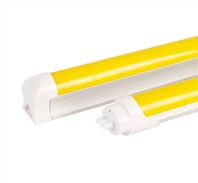
Electronic compatibility T8 Tube from Benwei

Electronic compatibility T6 Tube from Benwei