LED UV tubes are leading the way in the development of ultraviolet (UV) light technology, which has transformed a variety of industries, including manufacturing and healthcare. LED UV tubes provide environmental safety, accuracy, and energy efficiency in contrast to conventional mercury-based UV lamps. However, how precisely do these gadgets operate? This page delves further into the science, parts, and uses of LED UV tubes, providing a detailed explanation of how they work.
Knowing the Fundamentals of UV Light and LED
What Is UV Light?
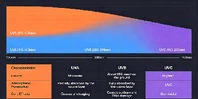
With wavelengths between 10 and 400 nanometres, ultraviolet light is a kind of electromagnetic radiation that is longer than X-rays but shorter than visible light. It is divided into three kinds according to wavelength:
UVA: Long-wave UV, useful for tanning, curing, and some sterilising (315–400 nm).
UVB: Medium-wave UV, which is linked to skin burns and has limited industrial utility (280–315 nm).
UVC (100–280 nm): Short-wave UV that works very well for germicidal and disinfecting purposes.
UV radiation is essential for procedures like curing polymers, sterilising surfaces, and cleaning water because of its capacity to disrupt chemical bonds and initiate photochemical reactions.
How Light Is Produced by LEDs
Semiconductor devices called light-emitting diodes (LEDs) release light when an electric current flows through them. When electrons in the semiconductor material recombine with electron holes, energy is released in the form of photons, a process known as electroluminescence. The semiconductor's bandgap energy, which is dictated by the composition of its material, determines the wavelength (colour) of the light that is released.
UV LEDs employ specialised materials like aluminium gallium nitride (AlGaN) to create ultraviolet wavelengths, whereas traditional LEDs produce visible light.
The Science of UV Tubes in LEDs
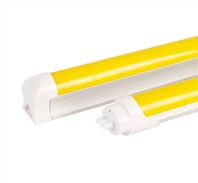
Multiple UV LEDs arranged in a linear array within a cylindrical tube are known as LED UV tubes. Three fundamental ideas underpin how they operate:
a. Bandgap engineering and semiconductor materials
The semiconductor material in the LED has to have a bandgap energy that matches UV wavelengths in order to emit UV light. For instance:
Use AlGaN or indium gallium nitride (InGaN) for UVA LEDs (365–405 nm).
UVC LEDs (250–280 nm): Need accurate doping of high-purity aluminium nitride (AlN) or AlGaN.
The semiconductor's elemental ratio may be changed to control the bandgap. Shorter UV wavelengths are made possible, for example, by raising the bandgap in AlGaN as the amount of aluminium increases.
b. UV LED electroluminescence
When the LED receives a voltage:
The p-type semiconductor layer receives electrons from the n-type semiconductor layer.
Electrons and holes recombine at the junction, also known as the active zone.
Photons are the energy released by this recombination.
The photons that are released from UV LEDs have ultraviolet wavelengths. However, heat production and material flaws make it difficult to achieve effective UV emission.
c. Conversion of Phosphor (For UVA Applications)
Phosphor coatings are used by certain UV LEDs to convert shorter wavelengths (like UVC) into longer UVA wavelengths. This is typical in curing applications where photoinitiators in inks or resins need to be activated by particular wavelengths.
Essential Elements of LED UV Tubes
Typical components of an LED UV tube include: a. UV LED Chips
On a substrate, many semiconductor chips are positioned. The intensity and homogeneity of the tube are determined by their density and placement.
c. The Heat Sink
When operating, UV LEDs produce a lot of heat. This heat is dissipated via a heat sink, usually made of aluminium, to prolong lifespan and avoid efficiency loss.
d. Driver Circuitry
transforms incoming AC electricity into the DC voltage that the LEDs need. Dimming, pulsed operation, and wavelength tuning are made possible by advanced drivers.
d. Sheltering
The LEDs are encased in a quartz or fused silica tube that lets UV light through while shielding them from moisture and dust.
e. Glasses
UV light can be focused or diffused to fit certain uses (e.g., narrow beams for precise curing).
Benefits Compared to Conventional UV Lamps
LED UV tubes perform better than traditional mercury lamps in a number of ways.
a. Immediate On/Off Function
In contrast to mercury lamps that need time to warm up, LEDs attain maximum intensity quickly. Batch procedures become more productive as a result.
a. Efficiency in Energy Use
In contrast to mercury lamps, which convert around 10–15% of electrical energy into UV light, LEDs convert about 40–50%.
c. Mercury-Free
removes the hazards that mercury dumping poses to human health and the environment.
d. Specificity of Wavelength
Narrow spectral peaks emitted by LEDs allow for precise targeting of pathogens or photoinitiators.
e. Long Life
Mercury lamps have a lifespan of 1,000–5,000 hours, whereas LED UV tubes have a lifespan of 10,000–50,000 hours.
LED UV Tube Applications a. UV Curing
used to quickly polymerise materials in adhesives, coatings, and printing. For instance:
3D printing: UVA radiation causes UV resins to solidify.
Packaging: Inks are cured on food-safe substrates using LED UV lamps.
b. Disinfection and Sterilisation
Bacteria, viruses, and fungi all have their DNA and RNA destroyed by UVC LEDs (260–280 nm). Among the applications are:
Without the use of chemicals, water purification renders germs inactive.
Medical Devices: Sterilises surfaces and surgical instruments.
b. Inspection and Forensic
UV light can expose material faults, counterfeit cash, or fingerprints.
d. Gardening
UVA and UVB rays promote the development of plants and increase the synthesis of phytochemicals.
Difficulties and Restrictions
a. Controlling Heat
Heat produced by high-power UV LEDs shortens their lifespan and efficiency. Modern cooling systems are essential.
b. Price
Although they are becoming less expensive, UV LEDs are still more costly than mercury lamps.
c. Limitations on Intensity
High-intensity UVC emission is still difficult to achieve technically.
Upcoming Patterns
Miniaturisation: Portable gadgets with small UV LEDs.
IoT-enabled tubes with real-time monitoring are examples of smart systems.
Recycling rare materials used in semiconductors is one example of eco-friendly manufacturing.
LED UV tubes, which combine sustainability, accuracy, and efficiency, are a significant advancement in UV technology. Applications ranging from industrial curing to life-saving sterilisation are made possible by their use of semiconductor physics and sophisticated engineering. LED UV systems are set to displace conventional lamps in a variety of sectors as research into cost and thermal issues continues, paving the way for a cleaner, more effective future.