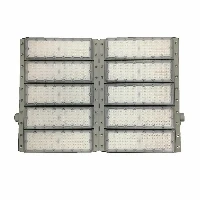
Because of their energy efficiency, robustness, and adaptability, LED flood lights have emerged as a key component of contemporary outdoor and industrial lighting. But when combined with intelligent controllers like motion sensors and photocells (photoelectric sensors), their full potential is shown. These solutions save energy waste, improve security, and automate lighting operations. This 1,500-word essay examines the kinds, integration techniques, advantages, and real-world uses of motion sensors and photocells in LED floodlights.
Overview of LED Lighting Automation
The way we light areas is changing thanks to automated lighting solutions. LED floodlights that are adapted to human presence and ambient circumstances may be operated hands-free by combining motion sensors and photocells. In addition to increasing convenience, this synergy maximises energy savings and prolongs the life of LED fixtures.
The detection and activation of motion sensors
Motion sensors activate the linked LED floodlights when they detect movement inside a predetermined region. They are frequently utilised in energy-saving configurations, route lighting, and security systems.
Motion Sensor Types
Sensors that use passive infrared (PIR)
How They Work: PIR sensors detect infrared radiation generated by heated things (e.g., humans or animals). The sensor signals the light to turn on when movement interferes with the infrared field.
Range: Usually 10–20 meters, with sensitivity that may be changed.
Advantages: Dependability for the majority of household applications, low cost, and low power consumption.
Cons: May miss slow-moving objects and has limited efficacy in extremely hot or cold situations.
Sensors for Microwaves
They monitor reflections from moving objects by emitting microwave pulses. The light is triggered by variations in wave frequency (Doppler effect).
Range: Broad coverage, up to 30 meters.
Advantages: Extremely sensitive; penetrates glass and walls.
Cons include increased expense and the possibility of erroneous triggers (such as swaying branches).
Ultrasonic Sensors
How They Operate: They employ ultrasonic sound waves, which are similar to microwave sensors.
Advantages: Good at picking up on minute motions.
Cons: Affected by temperature variations and air currents.
Two-Technology Indicators
Reduce false alerts by combining PIR and microwave/ultrasonic sensors. For both technologies to turn on the light, motion must be detected.
Combining LED floodlights
Wiring: Motion sensors can be either externally or integrated inside the fixture. While wireless devices utilise batteries and connect via Bluetooth or Wi-Fi, hardwired models connect straight to the LED driver.
Settings: The detection range, illumination duration (e.g., 30 seconds to 30 minutes), and sensitivity are all programmable.
Smart Features: Sophisticated sensors communicate with applications for scheduling, remote control, and integration into smart home ecosystems (like Google Home and Alexa).
Photocells: Using Ambient Conditions to Automate Light
LED floodlights are automatically turned on at nightfall and off at dawn using photocells, also known as photoelectric sensors, which sense the amount of ambient light.
How Photocells Work
Technology: Light-dependent resistors (LDRs) are used in the majority of photocells. The circuit is completed and the light is powered when the LDR's resistance decreases in the dark. High resistance disrupts the circuit throughout the day.
Calibration: To take into consideration seasonal differences in light or places that get shadow, modern photocells have thresholds that can be adjusted.
Photocell Types
Twilight switches: Simple, fixed-sensitivity models.
Activation light levels can be customised with programmable photocells (e.g., 10 lux for dim environments).
Smart Photocells: For dynamic adjustments, integrate them with timers or weather data.
Combining LED floodlights
Wiring: Usually, photocells are positioned between the LED driver and the power supply. Photocells are integrated into several LED lamps.
Hybrid Systems: To maximise energy savings, photocells in conjunction with motion sensors make sure lights only turn on when both motion and darkness are sensed.
Advantages of Using LED floodlights in conjunction with sensors
Efficiency of Energy
By only turning on when necessary, lights use less power while not in use. A motion-activated LED flood light, for instance, uses 70–90% less energy than one that runs continuously.
Increased Security
Unexpected lighting discourages trespassers. When motion is detected, smart systems can notify smartphones.
Increased Lifespan
LED components last longer than 50,000 hours thanks to less operating hours, which also reduce wear.
Practicality
Commercial loading docks, driveways, and walkways are the perfect places for hands-free operation.
Effects on the Environment
Carbon footprints are decreased by using less energy, which supports sustainability objectives.
Real-World Uses
Home Security
A motion sensor Backyards, garages, and entryways are all illuminated by LED floods. Lights won't switch on throughout the day thanks to hybrid systems.
Commercial and Industrial Areas
Photocell-activated LEDs are used in parking lots and warehouses to minimise expenses and adhere to safety rules.
Infrastructure for the Public
Photocell and motion sensor-equipped streetlights adjust to traffic patterns to improve visibility while reducing light pollution.
Lighting for Landscapes
Motion sensors illuminate paths as residents arrive, while photocells turn on garden LEDs at twilight.
Configuration and Installation Advice
Motion Sensor Positioning
Avoid aiming sensors towards moving things (like trees) or heat sources (like vents).
They should be angled to protect important spaces like driveways and doors.
Modifying Sensitivity
Adjust sensitivity and range to minimise false triggers. For instance, give high-traffic zones a reduced time limit of five minutes.
Examining Photocells
In order to mimic darkness and confirm activation, cover the sensor with a towel during the day.
Weatherproofing
Make that the wiring and sensors have an IP65 or above rating for outside use.
Difficulties and Resolutions
Inaccurate Triggers
Cause: passing cars, vegetation, or animals.
Fix: Change the sensitivity or use dual-technology sensors.
Variability in Photocell Efficiency
Cause: Shade from structures or trees.
Fix: Install several sensors or move the photocell.
Interference
Cause: Interference between wireless sensors and other gadgets.
Fix: Use other frequencies or hardwired systems.
Automated LED Lighting Trends for the Future
Sensors Driven by AI
By differentiating between people, animals, and cars, machine learning systems lower the number of false alerts.
Integration of LiDAR
Laser-based motion detection for ultra-precise tracking across broad regions.
Compatibility with the Sun
LEDs with motion sensors and solar panels for off-grid use.
LED floodlights are transformed from static fixtures into intelligent, adaptable systems using motion sensors and photocells. These devices save energy costs and provide safer, more efficient workspaces by reacting to movement and ambient light. The combination of LEDs and smart sensors is the lighting of the future-where automation and sustainability coexist-whether for public areas, commercial operations, or home security.