Overall Service Lifespan of Integrated Solar Street Lights
Definition of Effective Service Life
The service life of integrated solar street lights is divided into theoretical design lifespan and actual field operational lifespan. The theoretical lifespan refers to the maximum working duration of each core component under laboratory standard constant temperature, constant humidity and stable power environment, while the practical lifespan refers to the effective working time under complex outdoor environments such as high temperature, low temperature, rain, sand and ultraviolet radiation. High‑quality integrated solar street lights adopt industrial‑grade component configuration, with a comprehensive theoretical design life of 8–10 years for the whole machine. In actual outdoor scenarios, with standardized installation and scientific daily maintenance, the effective stable service life can reach 7–9 years; even in harsh environmental conditions, the normal service life can still be maintained at more than 6 years, which is far superior to traditional split solar street lights and ordinary wired street lights.
The whole‑machine lifespan of integrated solar street lights follows a graded attenuation standard rather than sudden failure. In the first 1–3 years of use, the equipment maintains 95%+ of the original lighting brightness and battery storage capacity, with almost no obvious performance attenuation; in the 4–6 year stable operation period, the comprehensive performance attenuation is controlled within 15%, and the lighting duration and brightness fully meet national outdoor road lighting standards; after 7 years of use, individual components produce mild aging attenuation, and the whole machine can still operate stably with simple maintenance and partial component optimization. This graded aging design avoids frequent equipment replacement and greatly reduces the comprehensive operation and maintenance cost of the project.
Lifespan of Each Core Component
The LED light source is the core lighting component of integrated solar street lights and the most stable part of the whole machine. This product adopts high‑density high‑brightness professional LED lamp beads, with a laboratory theoretical lifespan of up to 25,000 working hours. Calculated according to the daily night lighting time of 8–10 hours for outdoor street lights, the continuous service life of the LED light source can reach more than 8 years. Different from ordinary low‑cost LED beads with fast light decay, the lamp beads used in this product have ultra‑low luminous attenuation characteristics, with the light decay rate controlled within 8% after 3 years of continuous use and within 15% after 5 years, ensuring long‑term uniform and stable lighting without dark spots, glare or insufficient brightness.
The built‑in large‑capacity lithium‑ion battery is the key component that determines the continuous lighting capacity and service cycle of the equipment. Ordinary solar street light batteries are prone to capacity attenuation and cycle failure after 2–3 years of use, while this product is equipped with high‑quality deep‑cycle lithium batteries, supporting 2000+ charge and discharge cycles. Under standard use and maintenance conditions, the battery can maintain more than 80% of the rated capacity within 5 years and more than 70% of the capacity within 7 years, fully meeting the long‑term energy storage and power supply needs of outdoor lighting. In addition, the battery has excellent low‑temperature and high‑temperature resistance, which can avoid capacity collapse and cycle damage caused by extreme temperature changes in outdoor environments.
The product adopts high‑efficiency monocrystalline silicon solar panels, which have the advantages of high photoelectric conversion rate, strong UV resistance and anti‑aging performance. The theoretical service life of the solar panel is up to 10 years, and the photoelectric conversion efficiency can still be maintained above 85% of the initial level after 8 years of outdoor exposure. The high‑transparency tempered glass surface and anti‑aging aluminum alloy frame effectively resist sand and dust erosion, rainwater penetration and ultraviolet radiation aging, ensuring stable solar energy collection efficiency in various complex climates and avoiding power generation attenuation caused by panel aging.
The built‑in intelligent MPPT controller adopts industrial‑grade chip solution, with over‑charge, over‑discharge, short‑circuit and over‑temperature protection functions, and the service life is synchronized with the whole machine, basically no failure occurs within 8 years. The equipment shell is made of high‑strength engineering plastic with outdoor anti‑aging and anti‑corrosion treatment, with IP65 highest outdoor waterproof and dustproof grade. It can resist strong wind, heavy rain, sandstorm and long‑term sun exposure, no cracking, fading or deformation, and the structural protection performance remains stable for a long time.

In‑Depth Analysis of Battery & Light Source Loss Mechanism
Core Causes of Battery Capacity Loss
Lithium batteries will produce inevitable natural aging loss during repeated charge and discharge cycles. With the increase of service time, the internal chemical activity of the battery decreases, and the number of active lithium ions decreases, resulting in a slow decline in battery capacity. For ordinary low‑quality batteries, the capacity attenuation speed is fast, and the effective capacity drops sharply after 1000 cycles. While the supporting lithium battery of this product adopts optimized internal chemical formula and cell grouping technology, which greatly slows down the cyclic attenuation speed, and the capacity loss rate is far lower than the industry average. Even after long‑term cyclic work, it can still maintain stable energy storage performance.
Outdoor extreme temperature is an important factor causing battery performance loss. Long‑term high‑temperature exposure will accelerate the internal chemical reaction of the battery, cause thermal aging of the diaphragm, and increase capacity loss; long‑term low‑temperature environment will reduce the activity of battery electrolyte, resulting in insufficient charge and discharge efficiency and reduced instantaneous output power. In addition, humid and dusty environments may cause slight corrosion of battery electrodes and circuit contacts, inducing hidden loss risks. This product has built‑in intelligent temperature control protection, which can automatically adjust the charge and discharge strategy according to the ambient temperature, effectively reducing environmental loss.
Unstandardized use habits are the main cause of accelerated battery failure. Long‑term deep discharge (excessive discharge of battery power), frequent incomplete charging, and long‑term idle state will cause irreversible damage to the battery cell. In actual engineering use, many equipment capacity attenuates rapidly not because of product quality problems, but because of unreasonable lighting mode setting, resulting in long‑term over‑discharge of the battery. This product is equipped with an intelligent light‑sensing and timing dimming system, which can automatically adjust the output power and avoid deep discharge loss.
Luminous Attenuation Mechanism of LED Light Source
LED lamp beads will generate heat during long‑term lighting work. If the heat cannot be dissipated in time, long‑term high temperature will cause thermal aging of the lamp bead chip and fluorescent powder, resulting in decreased luminous efficiency and brightness attenuation. Ordinary integrated street lights have unreasonable heat dissipation structure design, slow heat conduction speed, and serious light decay after 2–3 years of use. This product adopts an integrated heat dissipation cavity structure, which can quickly export the heat generated by LED beads, maintain a constant low‑temperature working state of the light source, and greatly reduce thermal attenuation loss.
Long‑term outdoor placement will lead to dust, fallen leaves and sediment accumulation on the lamp surface and solar panel. Excessive dust coverage will not only reduce the photoelectric conversion efficiency of the solar panel and cause insufficient battery charging, but also shield the LED light source, resulting in reduced effective luminous flux and visual brightness attenuation. This kind of loss is cumulative. If not cleaned for a long time, it will reduce the overall lighting effect by 20–30%. The IP65 fully enclosed structure of this product can effectively isolate most dust and impurities, reducing the probability of shielding loss.
Product Optimization Design for Low Loss
This product is equipped with an intelligent segmented dimming system, which supports automatic brightness adjustment and timing power regulation. The system defaults to full‑brightness lighting in the early night with large traffic flow and reduces brightness appropriately in the late night with sparse pedestrians, reducing unnecessary power consumption by more than 30%. This intelligent power control strategy effectively avoids long‑term high‑load operation of the battery and light source, reduces charge and discharge pressure, and fundamentally slows down component loss and aging speed.
The built‑in high‑precision MPPT intelligent controller realizes full‑process protection of the battery and circuit, including over‑charge protection, over‑discharge protection, short‑circuit protection, over‑current protection and temperature protection. When the battery is fully charged, the system automatically cuts off the charging current to avoid over‑charging damage; when the battery power is low, it automatically reduces output power or enters standby mode to prevent deep discharge. The full‑link protection design eliminates abnormal loss caused by circuit failure and greatly extends the service life of core components.
Professional Maintenance Tips to Extend Service Life & Reduce Loss
Daily Regular Inspection & Cleaning Maintenance
Keep the surface of the solar panel and lamp shade clean is the basic maintenance work to ensure long‑term stable operation of the equipment. It is recommended to carry out a comprehensive cleaning every 2 months, and increase the cleaning frequency to once a month in dusty, sandy and rainy seasons. Use a soft clean cloth to wipe the surface dust, sediment and fallen leaves, avoid hard tools scratching the panel and lamp shade, prevent light transmission and power generation efficiency reduction caused by dirt coverage. Timely cleaning can restore 100% power generation and luminous efficiency, effectively avoiding performance attenuation caused by cumulative dirt loss.
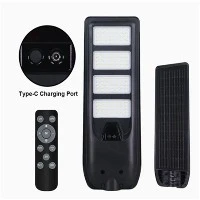
Conduct a weekly visual inspection of the equipment to check whether the light can automatically turn on and off with the light sensor, whether the remote control timing and dimming functions are normal, and whether there is abnormal flicker or darkness during lighting. Regularly check the equipment shell for cracks, water ingress and aging deformation, and confirm the firmness of the mounting bracket to avoid equipment shaking and component damage caused by loose installation. Early detection and elimination of minor faults can prevent small problems from evolving into large failures, reducing later maintenance and replacement costs.
Scientific Battery Maintenance & Loss Control
Avoid long‑term deep discharge and frequent incomplete charging of the battery is the core of battery maintenance. In rainy and cloudy weather with insufficient sunlight for a long time, use the reserved Type‑C emergency charging port for supplementary charging to prevent the battery from being in a low‑power state for a long time and causing irreversible capacity loss. For idle equipment, it is necessary to charge it regularly every 1–2 months to keep the battery activity, avoid battery dormancy and capacity shrinkage caused by long‑term idle state.
Master the battery health status through actual operation data. Under normal full charge, the continuous lighting time of the equipment is stable at 8–10 hours. If the lighting duration is significantly shortened to less than 6 hours, it indicates that the battery capacity has attenuated to more than 40%, and targeted maintenance or replacement is required in time. Regularly check the battery operating temperature, avoid long‑term high‑temperature operation, and ensure that the battery works within the optimal temperature range to reduce thermal aging loss.
Seasonal Adaptive Maintenance Strategy
In high‑temperature summer seasons, outdoor equipment is prone to heat accumulation and accelerated aging. It is necessary to check the equipment heat dissipation structure regularly to ensure unobstructed heat dissipation. Avoid long‑term direct exposure to extreme high temperature as much as possible, and use the intelligent dimming function to reduce the continuous high‑load operation of the equipment, reduce the overall heat generation, and effectively slow down the aging loss of batteries and light sources under high temperature.
In low‑temperature winter and continuous rainy seasons, the solar power generation efficiency decreases slightly. It is necessary to clean the snow and rainwater on the solar panel surface in time to ensure normal light reception and power generation. Appropriately adjust the lighting timing parameters according to the sunshine duration to avoid excessive battery power consumption caused by unreasonable lighting time, ensure the battery has sufficient residual power, and maintain stable cycle performance.
Timely Replacement & Fault Maintenance
When the battery capacity attenuation exceeds 40% and the lighting duration cannot meet the use demand after maintenance, the battery needs to be replaced in time; when the LED light source has obvious brightness attenuation, flicker and local darkness, and the light decay rate exceeds 30%, the light source module should be replaced. Timely replacement of aging components can avoid the whole machine being scrapped in advance, maximize the service life of the equipment shell, controller and solar panel, and save project procurement costs.
When the equipment has faults such as no light on, abnormal timing, and insufficient charging, do not disassemble the equipment privately. Private disassembly will damage the IP65 waterproof structure and internal circuit layout, causing secondary damage. It is recommended to contact professional after‑sales technical personnel for inspection and repair, ensure standardized fault handling, and maintain the long‑term stable performance of the equipment.
Product Advantages & Long‑Term Investment Value
Low Loss & Long Lifespan Core Advantages
Compared with ordinary low‑priced integrated solar street lights on the market, this product has obvious advantages in lifespan control and loss suppression. It adopts industrial‑grade high‑configuration components and optimized structural design, with LED light source lifespan up to 25,000 hours, battery cycle times up to 2000+, and whole‑machine stable service life up to 7–9 years. The ultra‑low light decay and battery attenuation design ensures that the equipment maintains excellent lighting performance throughout the service cycle, avoiding frequent equipment failure and performance degradation problems of ordinary products.
Ultra‑Low Operation & Maintenance Cost
This product realizes zero grid electricity consumption throughout the whole life cycle, with no recurring electricity cost. Routine maintenance is simple and low‑cost, no professional equipment and complex operation are required. The long service life and low loss characteristics greatly reduce the frequency of component replacement and equipment overhaul, and the comprehensive operation and maintenance cost is less than 30% of traditional wired street lights and ordinary solar street lights. For municipal projects, rural reconstruction projects and commercial parking lot lighting projects, it can bring extremely high cost‑performance and long‑term stable return on investment.
High Adaptability & Anti‑Aging Performance
With IP65 full‑level waterproof and dustproof protection, outdoor anti‑UV and anti‑corrosion shell treatment, and intelligent environmental adaptive control system, the product can adapt to high temperature, low temperature, rain, sandstorm and other harsh outdoor environments. It maintains stable low‑loss operation all year round, no performance attenuation caused by environmental changes, and has higher reliability and environmental adaptability than similar products, which is very suitable for large‑scale outdoor engineering promotion and long‑term fixed lighting scenarios.
Conclusion
The service life of integrated solar street lights is a comprehensive reflection of component quality, structural design and maintenance management. High‑quality integrated solar street lights represented by this product have ultra‑long whole‑machine service life and ultra‑low component loss rate relying on high‑performance LED light sources, long‑cycle lithium batteries, high‑efficiency solar power generation system and intelligent loss control technology. Scientific daily cleaning, standardized charge and discharge management, seasonal adaptive maintenance and timely fault replacement can further extend the equipment service life by 1–2 years and maximize the use value of the product.
In outdoor lighting project investment, the real cost performance is not low one‑time procurement price, but long‑term stable operation, low loss and low maintenance cost. This integrated solar street light perfectly balances long lifespan, low attenuation, strong durability and simple maintenance, providing a reliable, energy‑saving and cost‑effective long‑term lighting solution for all outdoor off‑grid lighting scenarios, and is the best choice for modern high‑quality solar outdoor lighting projects.

How To Cooperate With Us?
Because we have our own facilities, we are pleased to have complete control over the production process and the quality of our goods. We are committed to giving our clients the finest prices since we are manufacturers rather than just brokers. We encourage clients to look at our samples first since we are certain that the cost and quality of our items are transparent. Our dedication to excellence and client happiness motivates us to consistently provide superior products.
Our address
3rd Floor, 5th Building, Hebei Industrial Park, Hualian Community, Longhua District, Shenzhen, China