How Many Lumens Do I Need for a Fishing Light?
Selecting the appropriate lumens for a fishing light is a nuanced decision that hinges on multiple variables, each influencing how effectively the light attracts fish. Lumens, as the unit of measurable light output, directly impact the light's ability to penetrate water, draw in bait organisms, and ultimately lure target fish species. Whether you're a recreational angler or a commercial fisher, understanding the relationship between lumens and fishing conditions is vital to optimizing your success on the water.
Lumens quantify the total visible light emitted by a source, making them a more accurate measure of brightness than watts, which reflect energy consumption. In aquatic settings, light behaves uniquely: water molecules scatter and absorb light waves, with longer wavelengths (like red and orange) dissipating faster than shorter ones (such as blue and green). This means that even high-lumen lights may lose effectiveness at depth if their color spectrum isn't suited to water penetration. For example, a 2,000-lumen green light will penetrate deeper and attract more plankton than a 2,000-lumen red light, as green wavelengths are better retained in water. The key function of fishing lights is to create a "light trap" – a concentration of phytoplankton and zooplankton drawn by the illumination, which in turn attracts small baitfish, and eventually larger predatory fish. The lumen count determines the size of this trap: too few lumens limit the radius of attraction, while excessive lumens can disrupt the ecosystem by scattering plankton or startling fish with harsh glare.

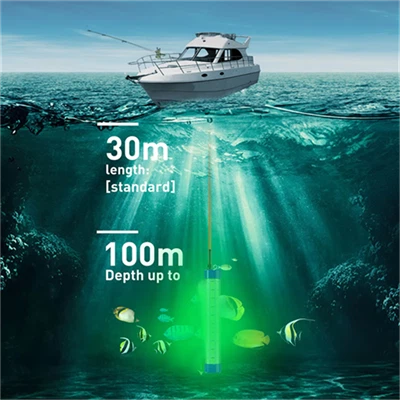
Freshwater environments, from calm lakes to turbulent rivers, vary widely in clarity and depth, demanding tailored lumen solutions. In shallow freshwater (less than 10 feet), such as pond edges or dock areas, 500 to 1,500 lumens are typically sufficient. This range is ideal for species like bluegill, crappie, and sunfish, which feed near the surface. The moderate brightness attracts zooplankton without creating a harsh contrast that might scare off skittish fish. Anglers targeting bass in these zones often opt for 800 to 1,200 lumens, as bass are drawn to the movement of baitfish illuminated by the light. For deeper freshwater (10 to 30 feet), including lake basins or river channels, lumens should increase to 1,500 to 3,000. This higher output ensures the light penetrates through suspended sediments or algae common in these areas. Walleye, known for their deep-water feeding habits, respond well to this range, as do larger pike and catfish. In murky water, where light scattering is pronounced, leaning toward the higher end (2,500 to 3,000 lumens) helps maintain visibility. Ice fishing presents a unique scenario, with the frozen surface acting as a natural reflector. Here, 500 to 1,000 lumens are adequate, as the confined space under the ice amplifies light intensity. Trout and perch, common ice-fishing targets, are sensitive to bright lights, so exceeding 1,000 lumens can deter them rather than attract.
Saltwater's higher density and often greater clarity require a different approach to lumen selection. Coastal saltwater (up to 20 feet deep), including bays, estuaries, and nearshore reefs, benefits from 1,000 to 3,000 lumens. Species like redfish, snook, and flounder patrol these areas, relying on light to spot crustaceans and small fish. The saltwater's density scatters light more than freshwater, so 2,000 to 3,000 lumens are preferable in turbid coastal zones, while clearer waters may suffice with 1,000 to 1,500 lumens. Offshore saltwater fishing, particularly in depths of 30 feet or more, demands significantly higher lumens – 3,000 to 10,000 or more. Pelagic species such as tuna, mahi-mahi, and wahoo are drawn to bright lights that mimic bioluminescent prey in the open ocean. Commercial vessels targeting squid or mackerel often use 5,000 to 10,000 lumens to create large, visible plankton blooms. Even in these depths, blue and green lights are preferred, as their wavelengths retain brightness better than other colors, maximizing the effectiveness of the lumen output.
Fish behavior plays a critical role in determining optimal lumens. Nocturnal feeders like catfish and tarpon are less disturbed by bright lights, thriving in 1,500 to 3,000 lumens in freshwater and 2,000 to 5,000 lumens in saltwater. Their reliance on scent and vibration, rather than sight, makes them tolerant of higher brightness. In contrast, daylight-active species like trout and bonefish are more light-sensitive. Trout in freshwater streams prefer 300 to 800 lumens, as excessive light disrupts their feeding patterns. Bonefish in shallow saltwater flats, easily spooked by glare, respond best to 500 to 1,000 lumens, which illuminate their prey without creating harsh shadows. Predatory fish with keen eyesight, such as barracuda and northern pike, require enough light to spot their prey but not so much that the prey becomes aware of danger. For these species, 1,500 to 3,000 lumens strike the right balance, highlighting movement without triggering alarm.
Water clarity is a primary modifier of lumen needs. In crystal-clear waters, such as mountain lakes or tropical reefs, light travels farther, so 500 to 1,500 lumens can cover 15 to 20 feet. In murky or stained water, where suspended particles scatter light, 2,000 to 4,000 lumens are necessary to reach the same depth. Time of day also influences requirements. Night fishing, when ambient light is absent, demands 1,000+ lumens to compensate. Dawn and dusk, with low-angle sunlight, require supplementary lumens (500 to 1,500) to enhance visibility without clashing with natural light. Overcast or stormy conditions, which reduce sunlight penetration, mimic nighttime in terms of lumen needs, often requiring 1,500 to 3,000 lumens even during the day.
LED technology has revolutionized fishing lights by delivering higher lumens per watt than traditional bulbs. A 15-watt LED can emit 1,500 to 2,000 lumens, equivalent to a 100-watt incandescent bulb but with far lower energy use. This efficiency is critical for anglers using battery-powered lights, as it extends runtime. LEDs also offer color options (green, blue, white) that align with optimal water penetration, ensuring lumens are used effectively. Fluorescent lights, while less efficient, produce a soft, diffused glow that works well in shallow freshwater (500 to 1,500 lumens). Incandescent bulbs, though outdated, can serve in emergencies but require higher wattages (100 to 200 watts) to achieve 1,000 to 2,000 lumens, making them impractical for extended use.
Underestimating lumens leads to ineffective fishing. A 300-lumen light in 20-foot-deep water will fail to attract plankton, leaving the area barren of fish. Conversely, overestimating lumens – using 5,000+ in shallow water – creates surface glare that blinds fish and disrupts their natural behavior. It can also attract insects, which obscure the light and annoy anglers.
Practical lumen recommendations vary by scenario: shallow freshwater (shore/dock) needs 500–1,500 lumens for bass and crappie; deep freshwater (10–30 feet) requires 1,500–3,000 lumens for walleye and catfish; ice fishing calls for 500–1,000 lumens for perch and trout; coastal saltwater (0–20 feet) uses 1,000–3,000 lumens for redfish and snook; and offshore saltwater (30+ feet) demands 3,000–10,000+ lumens for tuna and squid.
The ideal lumen count for a fishing light is a product of environment, depth, species, and technology. Freshwater anglers in shallow areas can thrive with 500–1,500 lumens, while deep-sea fishers need 3,000–10,000+ lumens. LED lights maximize efficiency, ensuring lumens translate to effective attraction. By aligning lumens with specific conditions, anglers can create the perfect light trap, turning a quiet night on the water into a successful outing.
https://www.benweilight.com/lighting-tube-bulb/deep-drop-led-fishing-light-2100-ft-select.html
Together, we make it better.
Shenzhen Benwei Lighting Technology Co.,Ltd
Mobile/Whatsapp :(+86)18673599565
Email:bwzm15@benweilighting.com
Skype: benweilight88
Web: www.benweilight.com
Add:F Building,Yuanfen Industrial Zone,Longhua,Bao'an District,Shenzhen, China