Rarely do broiler lighting plans specify more than eight hours of darkness in a day. Depending on the age of the birds, most provide two to eight hours of darkness inside, with many requiring just two hours per day in the week before the birds are sold.
When the birds are young, during the first week or two after placement, the light intensity in the home is increased. As the birds become older, however, the light intensity is lowered, sometimes to as little as 0.01 foot candles of light.
The birds may mistake the light pouring in through the tunnel fan apertures for daybreak rather than the inside artificial illumination.
At dusk, broilers typically settle down and sleep. Monitoring the amount of water used in the home can show how this is done. According to Fairchild, there is a strong correlation between feed and water usage, and water consumption decreases when the home is dark.
However, the researchers found something peculiar in homes with light intensities as low as 0.01 foot candles: Up to 80% of the birds were responding to the natural sunset and dawn outside the broiler house, according to statistics on water intake and bird body temperature. The birds mistook the artificial lighting in the house for sunrise because it was coming in through the openings in the tunnel fans. This meant that instead of the two hours predicted by the lighting schedule, market-age broilers were really receiving up to 12 hours of "darkness" per 24 hours.
Broilers that are close to market age sit in the dark periods of the house without eating or drinking but also without cooling down. A bird that is standing has more of its body exposed to the fast-moving air that the tunnel fans are pushing through the home. The majority of the birds' temperature loss, even with evaporative cooling, is caused by air movement.
Fairchild and Czarick advised against using light intensities lower than 0.1 foot candles to ensure that birds are responding to the day length we want them to. In hot weather, they also suggested delaying the broiler house's lights-out time until after midnight so that the birds can continue to move around and stand upright after dusk. As a result, body temperatures will be able to lower before the birds go to bed at night.
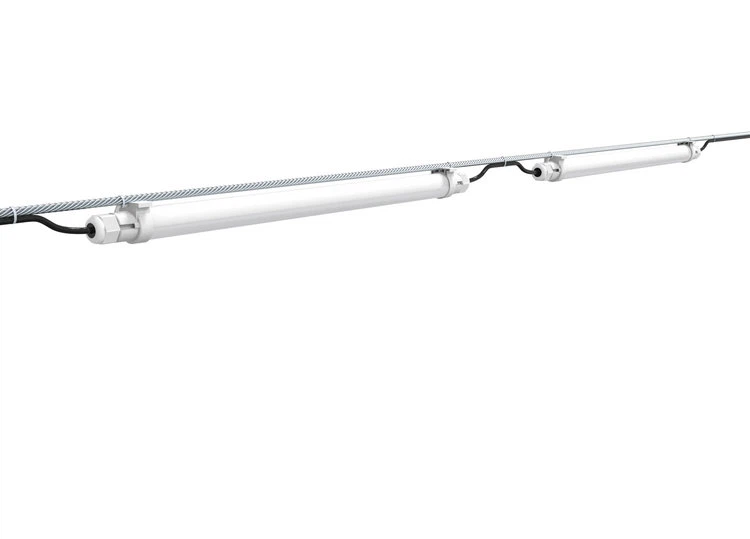
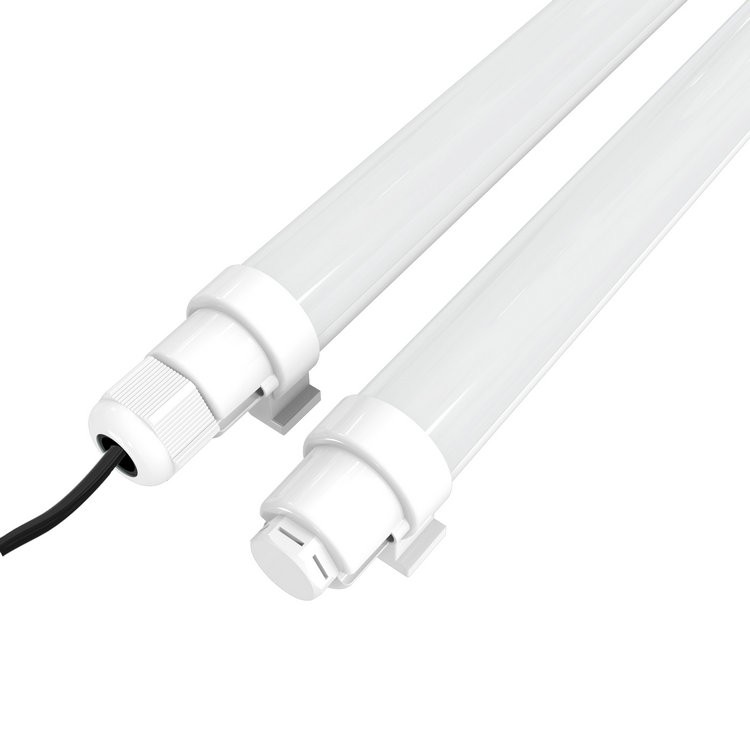


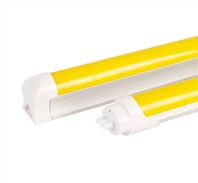
Benwei chicken coop lighting for egg production
|
Power |
Dimension(MM) |
LED Quantity(PCS) |
|
9W |
600*26mm |
Epistar 2835/48PCS |
|
13W |
900*26mm |
Epistar 2835/72PCS |
|
18W |
1200*26mm |
Epistar 2835/96PCS |
|
24W |
1500*26mm |
Epistar 2835/120PCS |
|
36W |
2400*26mm |
Epistar 2835/384PCS |