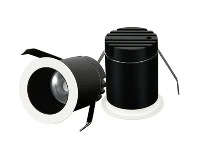
Beam angle for an LED ceiling light (like recessed downlights) refers to the angle at which the light spreads out from the fixture. A narrower angle produces a focused, intense beam (like a spotlight), while a wider angle creates more diffuse, even coverage (like flood lighting).
1) Common Beam Angle Categories
Narrow / Spot (5°–25°): Very focused, high intensity on a small area.
Medium (30°–45° or ~36°–40°): Balanced focus and coverage - the most common "standard" choice.
Wide (50°–75° or more, up to 90°+): Broad, even illumination for general ambient lighting.
2) Key Factors to Choose the Right Beam Angle
Room Size and Purpose
Small rooms / task lighting (kitchens, workspaces, reading areas): Narrower beams (24°–40°) for more concentrated light.
Large rooms / general ambient lighting (living rooms, bedrooms): Wider beams (60°+) for even coverage without dark spots.
Accent lighting (artwork, features): Narrow beams (<30°) to highlight specific objects.
Ceiling Height
Standard ceilings (8–9 ft / 2.4–2.7m): 36°–60° works well.
Higher ceilings (>9–10 ft): Narrower beams (24°–36°) to push light downward effectively.
Lower ceilings: Wider beams (60°+) to avoid harsh hotspots and glare.
Number of Fixtures and Spacing Wider beams allow greater spacing between lights. Narrow beams require lights to be placed closer together for uniform coverage.
A common rule of thumb for spacing: Ceiling height ÷ 2 (in meters or feet). Example: 8 ft ceiling → space lights ~4 ft apart.
Use the Spacing Criterion (SC) if provided by the manufacturer: Max spacing = SC × Ceiling height. Narrow beams have lower SC values.
Desired Effect
Even, shadow-free lighting: Wider beam.
Dramatic / layered lighting: Mix narrow (for accents) and wider beams.
Energy efficiency: Wider beams can sometimes reduce the number of fixtures needed.
3) Quick Recommendations for Residential Use
Most versatile / popular: 40° (medium) - good all-rounder for homes.
Living rooms / open spaces: 60°.
Kitchens / task areas: 36°–45°.
High ceilings or tall rooms: 24°–36°.
Bathrooms / hallways: Often 60° for broad coverage.
4) Additional Tips
Many modern LED downlights let you choose or even switch beam angles (e.g., 15°, 24°, 36°, 60°).
Test with a few sample lights if possible, or use lighting layout software/calculators.
Consider Color Temperature and Lumens alongside beam angle - brighter, narrower beams feel more intense.
Wider beams can reduce glare and eye strain in living spaces. you can find beam angles (e.g., 15°, 24°, 36°, 60°) on https://www.benweilight.com/ceiling-lighting/led-downlights/recessed-led-down-light-can-light-dimmable.html