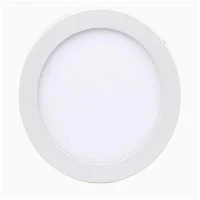
Since they are fashionable, classic, and space-efficient, downlights are among the most widely used lighting options. However, did you know that, due to their installation process, downlights were once viewed as a danger in both residential and commercial settings? Thankfully, this has been resolved with the development of fire-rated downlights!
Fire-rated: What Does It Mean?
Fire-rated alludes to a product that has undergone comprehensive fire-resistance testing to compute the length it can defend against fire. This might refer to a variety of criteria concerning functioning, the fitness of purpose, or time measurement.
When evaluating downlight, a real ceiling that has been exposed to fire that quickly reaches temperatures above 600 degrees Celsius is used; if the roof collapses before the anticipated downlight examination period is completed, the test will be deemed unsuccessful.
Therefore, downlights with extended fire ratings must ensure that the roof stays intact longer during the testing. For example, if a 30-minute downlight is being tested and the ceiling collapses in forty minutes, the fixture will pass the test; if it collapses in twenty minutes, it is a failure.
Whether the downlight is made in the UK or abroad, it must adhere to BS EN1365-2 regulations to be amendable in the UK. The standard refers to fire resistance tests for loadbearing elements Part 2: Floors and Roofs.
Fire-Rated Downlights
Unlike ordinary recessed ceiling lights you see in the kitchen, bathroom, or other commercial and household settings, fire-rated downlights are created with safety measures to slow down the spread of fire.
Recessed lighting requires a hole to be cut, which lowers the ceiling fire rating. The hole makes it possible for the fire to spread quickly between the property's floors. That isn't the case with downlights that are fire-rated. It is essential to fire safety and has the ability to seal off the hole.
An intumescent pad in a fire-rated downlight expands in response to a particular temperature. After that, it closes the hole, reducing the rate at which the fire spreads. Although the fire-rated times for this fixture vary, the most popular ones are 30, 60, and 90 minutes. However, some might also provide up to 120 minutes!
People can safely leave the premises thanks to this safety feature. It will be riskier if you solely use conventional downlights because the ceiling can fall in a matter of minutes. This can block escape routes, locking inhabitants and occupants within the flaming property-a situation that is very dangerous and frequently lethal!
Choose a downlight with a higher time delay that is fire-rated if you are designing the lighting system for a high-rise building. In the event of a fire, this will give those on higher floors more time to get out. In typical residences and buildings with fewer floors, where residents are close to the exit and would not need much time to leave, downlights can be used with lower time delays.
Issues with Traditional Downlights
The main problem with non-fire-rated downlights is that they are extremely dangerous and might cause serious harm or even death in the event of a fire. Ceilings are intended to inhibit the spread of fire. However, its efficacy is compromised when holes are cut into it to insert recessed lighting.
Over the years, downlights have evolved into a variety of shapes, sizes, and materials. Due to their beautiful appearance and ability to conserve space, they have long been a popular lighting fixture. The only issue is that this kind of lighting fixture has long been problematic with heat control. Thankfully, this issue was resolved, and downlights with a fire rating were created!
How to Know if a Downlight is Fire-Rated?
Examining the product description is the easiest method to find out if a downlight is fire-rated. Before making a purchase, confirm that the product's fire rating is stated. For online shopping, you can also go to a dedicated website for fire-rated downlights, or if you're buying in-store, you may ask a salesperson to point you in the direction of such fixtures.
You might want to know if the downlights you currently have are fire-rated. Your downlights may not be fire-rated if your house has been there for a long time and they appear to be ancient. Another option is to take off the downlight and look for a label on the sticker that says "fire-rated."
Let's say you are unable to locate a sticker or label. You may look at how the downlight's design differs. Examine the fitting's back after removing it. It is not fire-rated if it is open, but it is rated if it is close.
You can see beyond the bulb of a fire-rated downlight, which will have a metal casing. Still not sure? Examine online photos and contrast them with the fixture's construction.
Are there Alternatives to Fire-Rated Downlights?
Before anything else, complying with the building regulations regarding the fire risk recessed downlight may create must be your priority. Fire-rated downlights are the ideal recessed lighting because fire measures are already incorporated into their design.
You may be wondering, if a fire-rated downlight is necessary, why are there still recessed fittings which are more affordable? If you choose to use a regular downlight, you'll need to add a fire-rated hood to put over them. This will cost you more, outweighing your initial savings from purchasing a regular downlight.
It's always recommended to use recessed downlights that are fire-rated because they're constructed for your protection. Since they can slow down the reach of fire, your choice will impact the outcome should an unforeseen circumstance occur. Of course, it's best if nothing terrible happens and the damages will be minimal!