LED downlights are redefining modern indoor lighting with their combination of efficiency and sleekness.
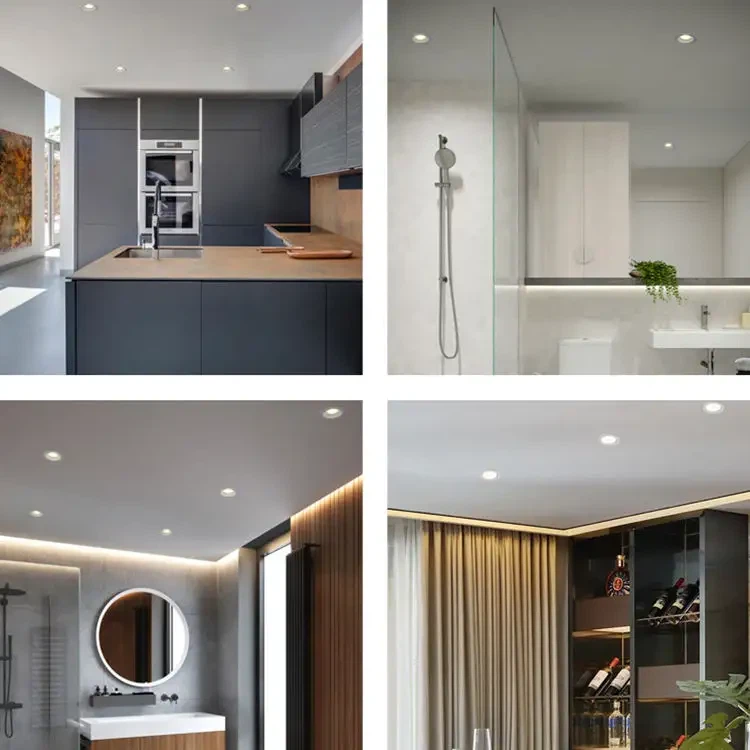
In the ever-changing environment of interior lighting, LED downlights have emerged as a cornerstone of modern design. They combine subtle beauty with great utility, making them a crucial component of the design landscape. The installation of LED downlights, also known as recessed downlights, into ceiling cavities creates a "flush" appearance that retains the clean lines of a room. This is in contrast to the installation of bulky ceiling fixtures or pendant lights, which dominate visual space. Not only does this incorporated design improve the minimalist beauty of contemporary interiors, but it also provides focused and consistent illumination. As a result, they are a popular choice among homeowners, interior designers, and commercial space planners alike. By putting an emphasis on both aesthetics and practicality, LED downlights have revolutionized the way in which we illuminate places, from the living rooms and kitchens of private homes to retail stores, businesses, and hospitality establishments. LED variants leverage cutting-edge technology to address the key pain points of modern users, which are energy efficiency, long-term reliability, and customizable light quality. Traditional recessed lighting options, such as halogen or incandescent downlights, suffer from high energy consumption and short lifespans. LED variants, on the other hand, are able to address these issues.
The unparalleled energy efficiency of LED downlights is the driving force behind their widespread adoption. This is an essential benefit in this period, which is characterized by an increasing awareness of the environment and an increase in the cost of electricity. LED downlights, on the other hand, manage to reach the same level of brightness with just 7-12 watts of power consumption, in contrast to traditional halogen downlights, which normally require between 50 and 75 watts to generate a modest 500 to 800 lumens of light. LED lights only require 15-25 watts, but halogen counterparts require 100+ watts. This is because LED models are able to meet higher brightness requirements, such as 1,500-2,000 lumens for bigger rooms. This results in energy savings of between 70 and 80 percent in comparison to conventional methods, which is a difference that adds up to a substantial amount over time. The installation of LED lighting might result in a reduction of hundreds of dollars in monthly power costs for a business space such as a retail store that has fifty downlights that are on for ten hours each day. The remarkable luminous effectiveness of LED downlights, which frequently exceeds 110 lumens per watt (lm/W), ensures that virtually all of the energy is turned into useable light rather than being lost as heat. This is in addition to the fact that LED downlights deliver cost benefits. Not only does this efficiency lower carbon footprints, but it also coincides with global sustainability goals, such as LEED certification for green buildings and national energy efficiency criteria. As a result, LED downlights have become an indispensable component in environmentally aware design initiatives.
Optical performance is another distinguishing characteristic of LED downlights. These downlights are designed to provide accurate illumination that is free of glare and can be adjusted to meet a variety of lighting requirements. LED downlights integrate advanced optical components to optimize light distribution, in contrast to certain above lighting that throw an uneven light or a harsh glare. Light is distributed more evenly. This is where the beam angle, which refers to the breadth of the light beam that is emitted by the fixture, comes into play. From low (15°-24°) beam angles for accent lighting to large (60°-120°) beam angles for general illumination, LED downlights provide a variety of beam angles to choose from. When it comes to accentuating certain locations, like as artwork in a home gallery, product displays in a shop, or architectural aspects like coffered ceilings, narrow beam angles are the appropriate choice. Wide beam angles, on the other hand, offer a broad and consistent coverage, which makes them excellent for general illumination in different environments such as living rooms, businesses, or hotel lobbies. Anti-glare features, which include deep recessed housings, frosted diffusers, or honeycomb grids, are included in many models. These features limit direct glare and minimize eye strain, which is essential for environments in which people spend long hours, such as workplaces or study rooms. In addition, the majority of LED downlights come with the capability to switch between several color temperatures. These color temperatures range from warm white (2700K-3000K) for pleasant domestic areas to cool white (5000K-6500K) for high-focus situations such as hospitals or offices. Because of this versatility, users are able to customize the lighting mood to suit their particular activities and tastes. For example, they may create a calm and soothing setting for a family meal or a bright and alert environment for a conference.
In addition to its versatility in terms of installation, LED downlights are also adaptable to a variety of ceiling types, which further solidifies their position as a versatile lighting option. LED downlights, in contrast to fixed ceiling fixtures, are meant to be installed in conventional ceiling cavities. The majority of types are compatible with cuts of four inches, six inches, or eight inches, which are the diameters that are most commonly used in residential and commercial buildings. The fact that they are compatible makes lights simple to incorporate them into newly constructed buildings or retrofit them into existing areas. This is because they can replace older recessed halogen or incandescent lamps without requiring significant alterations to the ceiling. Users are able to aim light at an angle (up to 30 degrees in certain models), which is made possible by the fact that many LED downlights are equipped with swivel or tilt mechanisms that can be adjusted. For sloping ceilings in attics or vaulted living rooms, where permanent lights may have difficulty delivering even light, this is very handy. Additionally, it may be used to emphasize certain places such as a bookcase or a fireplace. Additionally, low-profile LED downlight types are available for small ceiling cavities, such as those found in flats or basements, where space is restricted. These models have a depth of less than three inches. When it comes to the actual installation procedure, it is very simple. The majority of kits come with a mounting bracket, a wire harness, and detailed instructions, which makes it possible for homeowners to perform the installation themselves or for experienced electricians to quickly set up the system.
It is essential that LED downlights be designed with durability and long-term dependability in mind. This will ensure that they continue to be a lighting option that requires no maintenance for many years to come. The secret to their survival is on the efficient management of their temperature surroundings: LED chips are notoriously sensitive to heat, and temperatures that are too high can cause a decline in performance as well as a reduction in lifespan. In order to address this issue, LED downlights typically have housings that are made of high-grade aluminum or aluminum alloy, both of which are materials that are excellent at dissipating heat. The aluminum housing draws heat away from the LED components, which allows the fixture to remain cool even when it is being used continuously (for example, when using it in an office for twelve hours). This thermal design leads to a remarkable lifespan of 50,000 hours or more, which is comparable to more than 17 years of operation if it is used for eight hours per day continuously. LED downlights, on the other hand, require far fewer replacements than halogen downlights, which only last between 2,000 and 5,000 hours, while incandescent models only endure for 1,000 hours over their lifetime. Because of this, not only are the expenses of maintenance reduced, but the bother of changing bulbs on a regular basis is also eliminated. This is especially helpful in locations that are difficult to access, such as high ceilings in lobbies or stairwells. Additionally, LED downlights often carry IP (Ingress Protection) ratings of IP20 or higher: IP20 models are dust-resistant, making them suitable for living rooms or bedrooms, while IP44 or IP65 models are water-resistant, ideal for humid environments like bathrooms, kitchens, or covered outdoor patios (e.g., a porch with a ceiling).
The versatility of LED downlights to adapt to a variety of areas and lighting requirements is reflected in the wide range of applications that those downlights may be used for. When it comes to domestic settings, they are a popular choice for living rooms. In these areas, a grid of wide-beam downlights offers even overall illumination, while narrow-beam versions are used to accent artwork or other decorative elements. LED downlights that are water-resistant and have an IP44 rating are put above sinks or counters in kitchens to provide a bright and shadow-free light for the preparation of meals. The usage of dimmable LED downlights with warm white color temperatures is beneficial for bedrooms since it enables users to alter the brightness of the light even when they are sleeping or reading. LED downlights are also quite effective in commercial settings. Retail businesses utilize narrow-beam variants to draw attention to items (for example, clothes racks or jewelry cases), while wide-beam models are used to offer ambient lighting in aisles. The use of glare-free LED downlights in offices helps to minimize eye strain among employees, which in turn boosts productivity. Restaurants, on the other hand, utilize soft white downlights to create an intimate eating experience. Even public places like hospitals, schools, and hotels make use of LED downlights. Hospitals use models that are cool white and high-brightness in exam rooms to ensure clear visibility. Schools install models that are durable and dust-resistant in classrooms. Hotels use dimmable and sleek designs in lobbies and guest rooms to enhance the comfort of their guests.
Not only are LED downlights functional, but they also contribute to a healthier interior atmosphere and lessen the impact that they have on the environment. LED downlights, in contrast to traditional halogen or fluorescent downlights, do not contain mercury, which is a heavy metal that is harmful to humans and causes concerns to the environment in the event that the bulbs break or are disposed of in an inappropriate manner. Such risks include respiratory difficulties. Consequently, LED downlights are a more secure option for households that contain children or pets, as well as for commercial establishments that place a high priority on health and safety (for example, daycares or hospitals). Additionally, LED downlights produce a negligible amount of radiation that is both ultraviolet (UV) and infrared (IR). On the other hand, infrared radiation may cause a space to become unpleasant by producing heat, while ultraviolet radiation can cause furniture, carpets, or artwork to fade over time. This helps to retain the integrity of interior décor and maintain a pleasant room temperature, which in turn reduces the need for extra cooling in hotter areas. LED downlights assist to minimize these emissions, which helps to preserve the integrity of interior decor. Furthermore, because LED downlights have a longer lifespan and require fewer replacements, they produce less trash, which is in line with the principles of a circular economy and reduces the amount of the load that is placed on landfills.
As a result of the incorporation of smart technology, the attraction of LED downlights has been further increased, and they have become an essential component of contemporary smart homes and businesses. The dimmable capability of many sophisticated LED downlight models enables users to control the brightness of the light using either a conventional dimmer switch or an application specifically designed for smartphones. Certain models additionally provide color temperature modification (from warm to cold white) with the use of apps, which enables dynamic lighting changes. For instance, transitioning from warm white in the evening to cool white in the morning to mirror natural light cycles is an example of a function known as "circadian lighting." There is also the possibility of integrating smart LED downlights with voice assistants such as Amazon Alexa, Google Assistant, or Apple Siri. This would enable users to control the lights by using voice commands (for example, "Alexa, dim the living room downlights to 50%"). For commercial spaces, smart LED downlights can be connected to building management systems (BMS), which enables centralized control of lighting throughout an entire building. This control can include scheduling (for example, turning off lights in unused offices after hours) or motion sensing (for example, activating lights in a hallway when someone walks by). Not only do these intelligent features improve convenience, but they also provide an additional reduction in energy waste because the lights are only utilized when they are required.
In conclusion, LED downlights have revolutionized the way interior lighting is accomplished by combining a sleek and inconspicuous design with great energy economy, configurable optical performance, and long-term dependability. As a result of their adaptability to a wide variety of places, ranging from residential to commercial structures, as well as the positive effects they have on both health and the environment, they are an excellent option for contemporary lighting projects. It doesn't matter if LED downlights are used for general illumination, accent lighting, or smart, automated systems; they provide on all fronts: they reduce energy costs, they improve comfort and visibility, and they contribute to a more sustainable future. As LED technology continues to evolve, with advancements in brightness, color accuracy, and smart integration, LED downlights are set to remain a fixture in interior lighting, changing how we illuminate and experience places for years to come. This is possible because LED downlights are able to integrate smart technology.
Together, we make it better.
Shenzhen Benwei Lighting Technology Co.,Ltd
Mobile/Whatsapp :(+86)18673599565
Email:http://bwzm15@benweilighting.com
Skype: benweilight88
Web: www.benweilight.com
Add:F Building,Yuanfen Industrial Zone,Longhua,Bao'an District,Shenzhen, China