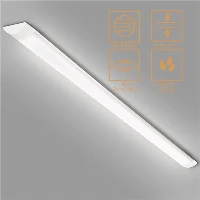
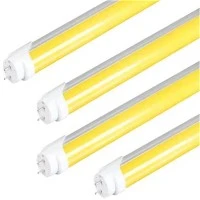
Do fluorescent tube lights conjure images of shabby kitchens or gloomy offices?
Despite its bad reputation, tube lights have a place in contemporary interior design. The ones that flickered before they passed away are no longer with them. They will undoubtedly be brought into the contemporary day by LED technology.
How Long Do They Last?
To be honest, longevity is probably not going to be the deciding factor in the LED vs. fluorescent tube light debate.
In typical circumstances, both varieties have a relatively lengthy lifespan. The lifespan of fluorescent tube lights is expected to exceed 24,000 hours. At the lowest end of the spectrum, that is around three years.
Tube lights should last at least 40,000 hours, but LED batten lights outlast that. Even though they are frequently used for many hours each day, they should last you many years.
Some manufacturers provide typical 10-year guarantees because they are so sure of their lights. LED lighting is expected to last up to 20 years with normal use.
How Energy Efficient Are They?
LED really starts to lead at this point.
The energy-efficient types of the time were fluorescent tube lights. They often last ten times longer than incandescent bulbs and consume one-third to one-fifth of the electrical power. They are unable to match LED lighting, though.
Conventional and LED bulbs are rated by wattage. This shows how much power is needed to create a certain brightness level.
Tube lights consume more energy since they are often quite bright. On the other hand, a brilliant LED tube light emits 1,720 lumens while using 18W. This goes above a typical 40W fluorescent lightbulb!
Your energy costs will decrease by more than 50% if you replace your fluorescent tube lights with LED ones. This is without the brightness decreasing. Simply said, they use a lot less energy.
How Easy Are They to Install?
It is very easy to switch from a conventional fluorescent tube light to an LED light. Simply follow these steps to install the LED tube light in a fixture with conventional ballast:
- Remove the old fluorescent tube
- Remove the starter
- Insert the new LED starter
- Insert the new LED tube light
The fittings are designed so that you can make the switch as easily as that. Fittings with an electronic ballast may not need the LED starter installing. Check the instructions that come with the LED bulb when you purchase it.
How Does the Quality of the Light Compare?
The light from fluorescent tube lights hasn't had a great reputation. Many people find it cold, harsh and depressing. There's actually a scientific reason for this.
We work best under a light that is similar to the sun. The light the sun produces is full-spectrum light. That means it contains all the colours in the spectrum.
Fluorescent tube lights produce a much more limited spectrum. These are mainly reds, greens and blues. And this light can give us the blues.
Some research suggests that fluorescent lighting may also contribute to eye disease. This is because they emit UV light which can be damaging to the eyes.
We instinctively recognize this as artificial. Fluorescent light also flickers. Although most people can't see this, it can lead some people to develop headaches and other issues.
LED lights, on the other hand, do not flicker. They produce a light that is more similar to the light of the sun.
LED lights also rate more highly on the Colour Rendering Index. This compares how well artificial light sources render colours when compared with sunlight. The closer a light source scores to 100, the more natural feeling the light is.
LED tube lights have a Colour Rendering Index of 80, which is good. They are also available in warm and cool white variants, depending on your preference. Cool light is best in office environments, where clear vision is of paramount importance.
How Easy Are They to Recycle?
LED lights are much easier to recycle than their fluorescent tube light counterparts.
Fluorescent lights contain many hazardous substances. These include potentially toxic chemicals like mercury. They're super brittle and fragile, and if they break, you can't recycle them.
They require a specialist hazardous waste disposal unit to process them because of the presence of toxic materials.
LED tube lights last much longer, so you need to buy fewer of them and recycle them less frequently. When they no longer work, they can be recycled at local council facilities. Specialist lighting recycling services may even collect them for recycling.
LED lights also contain fewer hazardous chemicals. The aluminium components can be easily recycled, and the electronic components can also be repurposed.
LED lights use very strong plastic rather than glass. This is much less likely to shatter, so it is much safer. You can also recycle the plastic.
Where Can I Use Tube Lights at Home?
Tube lights are very practical where you need task lighting. Different parts of our home serve different functions, and the type of light they produce is great where work is going on.
Consider tube lights when choosing lights for your garage and kitchen. They provide an all-encompassing light that's tough to replicate with other types of fittings. They're also great for under-cupboard lighting.
It's easy to make the switch from fluorescent to LED tube lights at home. They also offer more interior design possibilities, as they are dimmable and produce no UV radiation.
LED vs Fluorescent Tube Lights - The Winner Is Clear
There was only ever going to be one victor in the conflict between LEDs and fluorescent tube lights: LEDs. They save you money since they last a lot longer and consume less energy. Because they are considerably simpler to recycle, they are more environmentally friendly.

https://www.benweilight.com/lighting-tube-bulb/led-bulb-light/led-bulb-lights.html