When upgrading lighting in warehouses or offices, procurement professionals often face a common dilemma: old-style fixtures are bulky and energy-hungry, yet replacing them is confusing due to the sheer variety of models available. However, "Batten Lights" (also known as linear strip lights or integrated linear lights)-which have gained increasing attention from contractors and buyers in recent years-specifically address these pain points of energy and space efficiency. This article breaks down the ins and outs of Batten Lights to help you determine if they are the right fit for your project.
What is a Batten Light?
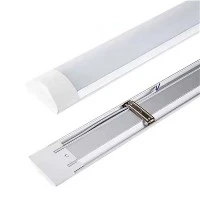
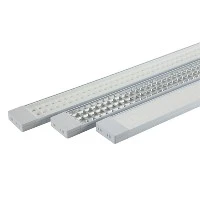
A Batten Light-often referred to as a "strip light" or "integrated linear light"-is essentially a slender, elongated fixture that integrates the light source, driver, and housing into a single unit. It can be mounted directly to the ceiling or suspended, eliminating the need for additional accessories like separate light trays or diffusers. Unlike traditional setups that combine fluorescent tubes with separate fixtures, the Batten Light features a unified, integrated design; this simpler structure serves as the foundation for its various advantages.
Where does the energy efficiency come from?
Energy savings cannot be explained simply by saying "we use LEDs." A closer look reveals several specific factors:
High light source efficiency: Mainstream Batten Lights utilize SMD (Surface Mount Device) LED chips, typically achieving a luminous efficacy of around 130–160 lm/W. For the same level of brightness, they consume significantly less power than older T8 fluorescent lamps.
Low driver loss: The integrated design places the driver board closer to the light source, minimizing circuit transmission losses. Additionally, the use of constant-current driver technology ensures minimal current fluctuation and more stable energy conversion.
Slow lumen depreciation and low replacement frequency: Energy efficiency is only part of the equation; if a fixture has a short lifespan and requires frequent replacement, the long-term total cost actually increases. High-quality Batten Lights exhibit a gradual lumen depreciation curve, maintaining brightness within an optimal range even after three to five years of use-effectively saving both money and energy in the long run.
Aspects of Space Efficiency
"Space efficiency" may sound abstract, but in terms of actual installation and use, it primarily manifests in the following ways:
Slim profile: Most batten lights have a thickness of around 3–5 cm. When ceiling-mounted, they take up negligible vertical space, making them ideal for warehouses and underground garages with low ceilings.
Integrated design eliminates bulky accessories: There is no need for extra fixtures like mounting brackets, shades, or reflectors. Once installed, the light appears as a sleek, continuous strip without protruding structures, resulting in a cleaner visual aesthetic.
Connectable for extended runs: Many batten lights support end-to-end connection, allowing for a continuous line of light. This eliminates the need to install multiple separate units side-by-side to cover long distances, thereby simplifying both wiring and mounting structures.
Common Application Scenarios
Thanks to their simple structure and flexible installation, batten lights are widely used in scenarios such as: aisle lighting in warehouses and logistics centers, underground garages, supplementary lighting in factory workshops, corridors with suspended ceilings in offices, and shelf-area lighting in supermarkets and retail stores. These environments share common characteristics: limited ceiling height, large lighting areas, and a high sensitivity to fixture lifespan and maintenance costs.
Key Details to Consider When Purchasing
If you plan to purchase batten lights, it is recommended to focus on the following specifications rather than just the price:
Luminous efficacy: Ask for the specific lm/W (lumens per watt) value; do not rely solely on vague claims of "energy efficiency."
Driver quality: Check for comprehensive over-voltage and over-current protection, as this directly impacts the fixture's lifespan and operational safety.
IP rating: For environments like warehouses or garages, an IP44 rating or higher is recommended to ensure adequate dust and moisture resistance.
Connection design: If you need to install lights over a long distance, verify beforehand that the connection mechanism is secure and the wiring layout is convenient.
Certifications: Confirm necessary certifications (such as CE, RoHS, or UL) based on the target export region to avoid issues during customs clearance or final inspection.
Conclusion
Batten lights have become increasingly common in warehousing, industrial, and commercial lighting sectors over the past few years primarily because their integrated design simultaneously addresses the needs for energy efficiency and space savings. However, determining whether a specific product truly meets the required standards depends on concrete technical specifications-such as luminous efficacy, the driver, and the ingress protection (IP) rating-rather than just its appearance or marketing claims.
If you are evaluating lighting upgrade plans for a warehouse, workshop, or office space, please share the ceiling height, floor area, and illuminance requirements of your project with us. Based on these details, we can recommend the appropriate batten light models and provide you with quotations and samples.