Savings shine for poultry houses with LED lights
However, he continued, convincing the estimated 2,400 "broiler" farmers in the state has proven challenging. The machinery utilized in the houses operated by contract poultry farmers is approved by integrators like Tyson Foods Inc. of Springdale or Pilgrim's Pride Inc. of Greeley, Colorado, who purchase the chicken that is raised on broiler farms.
Farmers have required assistance to replace incandescent bulbs because they are "frugal and reluctant to change," according to Beaver, whose business specializes in creating light-emitting diode, or LED, technology.
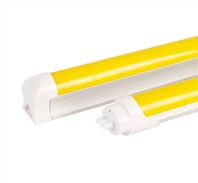
A semiconductor device called a light-emitting diode transforms electricity into light. Despite their high cost, LEDs are praised for their longevity and energy efficiency.
According to Scot Hundley, director of operations for Rogers-based Luma Vue, the only other Arkansas-based vendor taking part in the rebate program, a farmer who switches from an incandescent bulb to an LED may recover his investment in less than a year.
As of now, 118 farmers have had their refunds from the Arkansas Poultry Lighting Rebate Program processed.
According to the AEDC, rebated purchases have varied from as little as 52 bulbs—enough to light one house—to as many as 1,536 bulbs.
The UA also keeps up a demonstration project that was initiated in February 2010. Three bulb manufacturers, including NextGen and Luma Vue, took part in the research. Bulb distribution was made possible by federal stimulus funds and was done over 10 farms. The UA's poultry science department website contains a link to the Energy Grant Phase 1 report.
At least two of the LED solutions exhibited on poultry farms in this experiment are proving energy efficient as well as favorable to promoting optimal bird performance, the research said. The demonstration project finishes on December 31. There are between 50 and 150 bulbs needed each coop. About 25% of the energy used in a chicken house is used for lighting, which is an ongoing cost.
OUTDOOR TESTS
The project's findings, according to Beaver, may assist salespeople in better overcoming objections that a presentation is "simply snake oil."
By halving the cost of the bulb, the "stimulus money for us stimulated [bulb sales]," according to Beaver. "While that has a big influence, I believe the [field] demonstration, testing, and validation in the field before it [the bulb] came out, built a credibility in the market," the author says.
Now, he said, "I'm not simply a person trying to sell a bunch of lights."
Farmers may be more willing to embrace LED lighting after they "saw individuals doing well with it," according to Susan R. Watkins, an associate professor in the poultry science department.
She pointed out that early LED testing was done by large-scale businesses or those who could afford a $36 bulb.
According to Watkins, that's "a significant amount of money for those on a limited budget."
Since the chicken business this year started rectifying an excess of supply on the market, some farmers have been forced to pay closer attention to their financial situation. Companies have increased the intervals between flocks while simultaneously laying fewer eggs for hatching.
A farmer who was used to receiving deliveries as soon as eight days might suddenly anticipate having to wait up to a month.