Studio light for photography: What is it and how to choose?

Asking yourself these questions can help you limit down your possibilities if you choose to go on to studio lighting for photography as the next stage in your photographic lighting journey. Making a decision may also be aided by taking the time to study about various varieties. Read the article beforehand so you can make an efficient and informed purchase before you go for the shop.
Photography studio light types: Definition, benefits, and drawbacks
The primary studio lighting types are covered in this section. It should be emphasized that each variety has unique uses, levels of mobility, prices, and other characteristics.
What you see is what you get thanks to constant illumination
For intense lighting, COLBOR CL60 studio lights are ideal for portrait photography.
The way a regular home lamp works is the same as how a photography continuous studio light works: you turn on the switch, and the light comes on. When you flip the switch off or the bulb goes out, it will then stay lit. It is quite helpful for lighting a studio since you get what you see. You may change a shadow or reflection if you don't like it and then see the immediate impacts.
Typically, there are three types:
LED: LED studio lights are a popular option for photography. They are fairly priced and don't overheat. The majority of LEDs, on the positive side, let you change the color temperature, which makes them perfect for setting various moods, using creative effects, or adjusting the white balance when used in conjunction with other light sources. Check out MAURO'S FILMS's YouTube video to see how the COLBOR LED studio light works when used as photographic illumination.
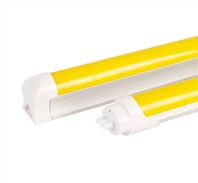
Fluorescent: Fluorescent light bulbs are available in a range of hues, such as white, green, yellow, and red. They are well-liked since they are cool to the touch and utilize little energy. They are the ideal studio lights for photographing products and people. To light up larger places, you might purchase socket supports with several sockets. They come in whole kits, standalone lights with accessories, and single plugs, all of which are extremely economical.
Tungsten: These light sources provide a warm yellow light that is often used for interior lighting. This kind of lighting or a tungsten-halogen combination, which is more energy-efficient, is used in the majority of home lights.
Although it may overheat, tungsten is often employed in photography studios.
The warm, natural color palette provided by tungsten studio lights is perfect for still life and portrait photography. Considering that tungsten lights have a color temperature of around 3200K, be careful to adjust your camera's white balance.
Pros
usually affordable
The lighting impact is seen in real time.
lighting in photography studios for beginners
Can be utilized for both photography and videography Drawbacks
may generate a lot of heat (especially tungsten) and pose a fire danger
White balance is difficult to achieve and is bulb-dependent.
decreased power output
usually a fixed power output (particularly with lower-end devices)
Unsuitable for outdoor shooting
battery loss (LED)
problematic color cast (tungsten)