How to Light Your Workbench and Tool Area Effectively?

So, you're finally fixing that wobbly chair leg or tackling that long-delayed DIY project. Good for you! But when you're tinkering in your workshop, good lighting isn't a luxury-it's a secret weapon.
If you're still squinting under the flickering glow of an old fluorescent tube from the '90s, we're judging you a little. Why struggle when you can install task lighting and transform your workspace?
In this post, we'll flip the switch on the productive world of task lighting. Why is it a game-changer? What types are best? What creative options can you implement today? Let's jump in!
Why Task Lighting is Essential
Have you ever been working in your garage only to have a screw mysteriously vanish? It might not be your forgetfulness-it could be your lighting.
Most garages and sheds aren't designed with lighting in mind. Many rely on a single bulb hanging from the ceiling, casting more shadows than light. That might be fine for grabbing the lawnmower, but it's nowhere near enough for detail-oriented tasks like soldering, measuring, or repairing small parts.
Enter task lighting. It brings light directly where you need it: your work surface. Here's why it matters:
Improves Precision for DIY and Repairs
Ever tried soldering or matching screw threads in poor light? It's challenging. Task lighting ensures every detail is crystal clear. A bright, focused beam helps you measure, cut, drill, or glue with pro-level confidence (though we can't guarantee the results!). LED lights are ideal-they provide consistent, flicker-free brightness, so you work more accurately and spend less time fixing mistakes.
Reduces Eye Strain and Increases Safety
Dim lighting is great for relaxing, but not for sawing wood. When your eyes strain to focus, you're more likely to misjudge distances, make inaccurate cuts, or even injure yourself. Good task lighting offers bright, clear visibility, eliminating the risks of working in the dark.

Choosing the Right Brightness and Beam Angle
Brightness:
For most workshop tasks, aim for 5,000–8,000 lumens in total. The light should be bright enough to illuminate tools and surfaces without causing glare.
Beam Angle:
Narrow beam (30°–60°): Concentrates light on a small area, perfect for detailed tasks.
Wide beam (90°–120°): Spreads light softly across the entire workbench.
Combine both for optimal functionality: use wide-angle lighting for general visibility and narrow beams for precision work.
✅ Recommended Brightness and Beam Angle Guide
| Task Type | Recommended Lumens | Beam Angle | Example Fixtures |
|---|---|---|---|
| Detailed work (soldering, small parts) | 3,000–5,000 | 30°–60° | Adjustable LED lamp/spotlight |
| General work (assembly, sanding) | 5,000–7,000 | 60°–90° | LED strip/panel light |
| Overall workspace lighting | 7,000–10,000+ | 90°–120° | Overhead LED batten/track light |

Best Task Lighting Solutions
Task lighting isn't one-size-fits-all. Depending on your needs, you might prefer portable lights or permanent installations.
1. Adjustable LED Work Lights and Desk Lamps
If you frequently move around your workspace, these are your go-to option. They offer flexibility to direct light exactly where it's needed.
Look for these features:
Swivel heads and adjustable arms: For easy positioning without makeshift supports.
Clamp or magnetic bases: Keep the light stable, even on uneven surfaces.
Dimmable settings: Adjust brightness for different tasks.
Check out Benwei Lighting's extensive range of portable LED lights-ideal for garage use. Some are stylish enough to double as home office lamps.
2. Under-Cabinet and Overhead Task Lighting
If you have a dedicated workbench, permanent lighting is the way to go. These solutions provide consistent, shadow-free light without any setup required.
Under-cabinet LED strips: Slim, discreet, and perfect for mounting under shelves.
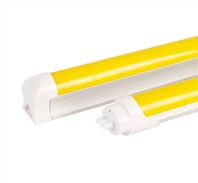
Overhead LED battens: A modern upgrade to fluorescent tubes-energy-efficient, long-lasting, and powerful.
Spotlights or track lighting: Adjustable permanent fixtures that let you direct light to specific zones.
Once installed, these lights are always ready-no plugging or unplugging required.

Quick Tips for Installation
Layer your lighting: Combine ambient (general), task (focused), and accent (decorative) lighting for a balanced setup.
Plan your wiring: For permanent fixtures, ensure easy access to outlets. Avoid relying on extension cords long-term.
Choose the right color temperature: Neutral white (4000K–5000K) is ideal for task areas-bright and crisp without being harsh.
Test placement first: Before drilling or sticking, check for shadows. Adjust the light position to minimize obstructions.
Final Thoughts: Light Up Your Workspace
Whether you're a DIY enthusiast or a professional, proper task lighting can boost efficiency, precision, and safety. From adjustable LEDs to permanent fixtures, choose the solution that fits your workflow and make every project a well-lit success.