Every plant parent wants their offspring to become enthrallingly lush and healthy adults. The quantity of sunshine that is accessible is one of the most important elements in deciding how healthy your plant is. Different plants need different amounts of light, thus it may sometimes be difficult to choose the perfect quantity for your plant. The information in the following article will provide you the answers you need to better understand how light affects plants and why it is crucial.

Light's Importance for Plant Development
Light generates the prized splits in the leaves of your Monstera Deliciosa and makes your Fiddle Leaf Fig the main point of your living area. Your plants' ability to develop and thrive depends on the proper balance of light, which is essential to their health. Your plant won't be able to develop, blossom, or set seed without enough sunlight. On sometimes, you could see a plant slanting toward the light. In a process known as phototropism, hormones in plants that are sensitive to light cues cause the plant's stem to slant toward the sun or other light source in order to get access to more light. Your favorite plants will stay healthy and living for years to come if you are aware of their lighting needs and meet them.
Light's Role in Plant Development
Whether directly or indirectly, photosynthesis is essential for the survival of the majority of Earth's living species. You may recall the word "photosynthesis" from your biology class in high school, or you may be familiar with the term "chlorophyll," which refers to the apparently green pigment found in plants. The process through which plants convert light, carbon dioxide, and water into chemical energy is known as photosynthesis. Light energy is used to convert the carbon dioxide and water into sugar and oxygen throughout this process. The sugars are necessary for the production of cellulose, which strengthens plant cell walls, as well as for providing energy to the plant. Plants collect light via their leaves, which also contain tiny plant organs called chloroplasts. Chlorophyll is a pigment found in those chloroplasts. Our plants often come in a variety of colors of green because chlorophyll in the leaves absorbs red and blue light for photosynthesis and then reflects out green light. This is why chlorophyll appears green to the human eye.
It is impossible to overstate the role that light plays in supporting life on Earth. In addition to making plants larger and stronger, the process of photosynthesis produces oxygen, which is essential for the existence of the majority of living things. Humans participate in the process by breathing the carbon dioxide that plants require for photosynthesis and absorbing the oxygen that plants provide. Life as we know it is supported by this symbiotic gas exchange.
Light Sources for Plant Development
Various plants need varying amounts of light. Don't be misled by the plant tags. You should have a sense of the natural lighting in your house and a rough idea of the types of natural lighting that various parts of your house get before you buy a new plant. Bright direct light, bright indirect light, medium light, and low light are the words that are used on plant tags to indicate the varying light levels required for different plants.
Bright direct light necessitates placing the plant on a windowsill or another location where it will get continuous sunshine. The plant should be placed next to a window but not immediately on the windowsill, where it would be exposed to continuous sunshine, in order to get bright indirect light. Plants that thrive in medium light levels need filtered light, which may be found in shaded regions of your house. Low light plants may be planted practically anyplace in the house and can survive with little sunshine.
Natural sunshine is not constant, and depending on the latitude of your location, the amount of natural light that enters a window may vary seasonally. Not all plants can survive under all climatic conditions. The drier air and less sunshine as one gets closer to the poles may make winter exceedingly hard on tropical plants. Thankfully, plants can now adapt to low light conditions thanks to human inventions! Plants that could not endure colder regions are now able to endure severe winters inside because to the use of artificial light and the introduction of plants indoors.
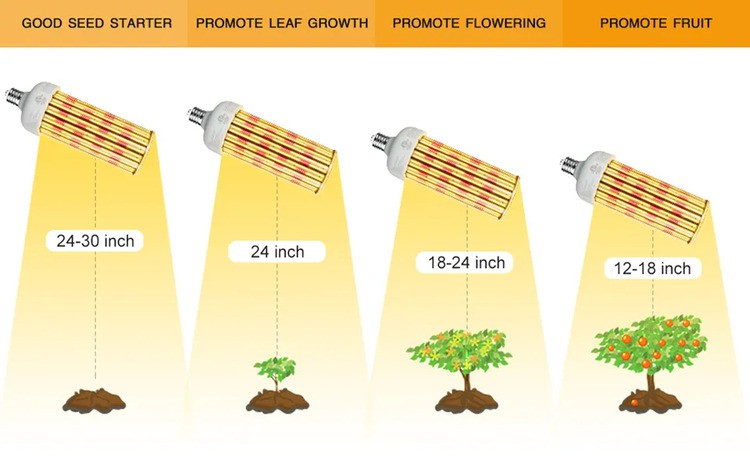
Highlights Plants with Uneven Light Access
Your plants won't have any trouble letting you know when their lighting needs to be changed. You can tell whether your plant is receiving enough light by looking for a lush, robust plant with strong leaves and straight stalks. When a plant is exposed to much light, its leaves may droop and eventually change color. The leaves will either become yellow or develop brow dots, as you'll see. Other signs that your plant is getting too much light include dry patches and browning of the leaf tips. A leaf's crispness is never a good omen. The plant may eventually spiral downward as its development slows.
Plants that don't get enough light will also let you know when anything is wrong. Too little sunshine prevents plants from producing enough chlorophyll to complete photosynthesis, which causes their leaves to become pale and sometimes yellow. Insufficient sunshine may cause plants to lose their leaves and develop very little. If your plant is a bloomer, not getting enough sunshine may prevent it from flowering.
Thankfully, it should be simple to rectify the issue once your plants have informed you of it. Depending on the plant, look for a different location with less or more light. It shouldn't take long after you choose the ideal location before your plant regains its vitality and begins to bloom once again.
Light Factors for Healthy Plant Development
In order to live, plants have evolved to receive light from any available source or sources. While natural light is preferred, artificial light may also fill up any spaces left by natural light. Knowing which windows are appropriate for certain plants and what kinds of light are produced by artificial lighting can help you provide your plants the greatest possible environment.
Sunlight coming through a Window
While bringing plants inside, you should also think about the window's orientation. Plants that need strong light should be placed near south-facing windows. For sunny south-facing windows, plants like the ever-popular Fiddle Leaf Fig or the opulent White Bird of Paradise are ideal. In addition to being in the opposite direction of south facing windows, north facing windows are the worst for plants that need intense light. For low-light plants like the ZZ plant or the Lisa Cane, north-facing windows are ideal since they get the least amount of light. In a recess with filtered light, these plants will flourish. Although east-facing windows don't get much brilliant direct sunshine, they do get enough indirect light for medium- to low-light plants to thrive. Your indoor plants may get some direct sunlight from west-facing windows in the late afternoon. The majority of indoor plants perform best and flourish in windows that face west.
Lamp Light with Low Light
To live, plants must be able to do photosynthesis. Red and blue are the two particular visible light wavelengths needed for photosynthesis. Each one offers the plant a distinct advantage. The development of leaves and stems is encouraged by blue light, which results in a larger, denser plant. Green plants may be encouraged to develop new leaves and stems by fluorescent lighting. For the purpose of blossoming or sowing, the plant may identify the time of day or year by using the red light as a kind of watch. Red visible light is best emitted by incandescent lighting. Your plants will grow long and lanky if you just utilize red light, as opposed to the dense, full growth that blue light promotes. When selecting artificial lighting for your plants, it is ideal to make sure they can access both blue and red light rays. According to university research, low light plants may thrive in environments with artificial lighting when they have access to 30 watts of incandescent light and 100 watts of fluorescent light. It's crucial to remember that heat from artificial light might harm your plants. A careful balance has to be kept in place for your plant to grow, just like with natural light.