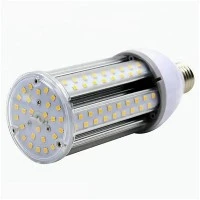
The Ministry of Finance provides subsidies for the first time to promote the LED market
At the end of March, the "2012 Semiconductor Lighting Product Financial Subsidy Promotion Project" organized by the Development and Reform Commission, the Ministry of Finance, and the Ministry of Science and Technology conducted a public bidding at the Schönbrunn Palace Hotel in Beijing to determine the promotion of high-efficiency lighting products, product specifications, and agreed supply prices . According to reports, more than 100 companies participated in the tender.
This financial subsidy promotion project is the first time that the Ministry of Finance has subsidized the promotion of LED products. Previously, it was mainly for upstream chip companies to purchase MOCVD (gallium nitride metal organic chemical vapor deposition machine). This tender includes indoor lighting products LED downlights, reflective artesian LED lights, and outdoor lighting products LED street lights and LED tunnel lights.
According to my country’s roadmap for phasing out incandescent lamps, starting from October 1, 2011, the import and sale of general lighting incandescent lamps will be gradually banned in five stages according to the power level. According to data from the National Development and Reform Commission, the domestic sales volume of incandescent lamps in 2010 was 1.07 billion. According to industry insiders, after the phasing out of incandescent lamps, alternative products will be traditional energy-saving light sources and LED lighting sources.
"The Development and Reform Commission is likely to invest 8 billion yuan this year to subsidize civilian LED lighting." According to the analysis of He Zaihua, a senior researcher at China Investment Consulting, after the gradual ban on the import and sale of general lighting incandescent lamps, the promotion of energy-saving lamps has become the main task of the government. Local areas have already taken a step ahead. For example, Guangdong Province will gradually implement indoor lighting subsidies in 2012, and it is planned that by 2015, LED lighting will account for 30% of Guangdong’s indoor lighting; in terms of municipal lighting, there will be more than 600,000 in the next two years LED lamps are used for street lighting. Not long ago, 10 local LED companies in Foshan, including National Star Optoelectronics, Snow Wright, Foshan Lighting, Midea, and Osram, have just won the local Jiabo City LED lighting project orders. The total scale is more than 100,000, and the total purchase value is expected to exceed 100 million yuan.
Data shows that from January to July 2011, my country’s LED industry plans to increase investment totaling 125.618 billion yuan, of which more than 40% of the funds are invested in multiple industrial links, or even the entire industry chain. What is more noteworthy is that the investment made by non-LED companies entering the LED industry has accounted for more than 45% of all investment projects.
"Many companies are fancy state-related policy support and related subsidies, which have flooded into the upstream LED industry, causing disorderly expansion of production scale; on the other hand, the market for downstream applications has not yet been fully opened, resulting in stagnant digestion of upstream products. Slow down." said Chen Xin, the public relations manager of Hongyan Electric.
According to a report from LEDinside, an LED industry research organization, in 2012, due to the huge production capacity of MOCVD machines that produce chips has not been fully released, the overall industry oversupply will continue.
He Zaihua said that in the context of overcapacity, industry consolidation is an inevitable trend. From the analysis of the entire LED industry chain, the upstream companies have the highest concentration, the midstream is relatively concentrated, and the downstream application market is the most scattered.
In He Zaihua's view, thanks to the rebound in demand for LED backlights and the growth in demand for LED lighting, this year the domestic LED industry will show a trend of low and high development. But "overcapacity, especially the overcapacity in the chip segment is particularly obvious. According to the current development trend, domestic LED production capacity will not be fully digested until at least 2013."
Chen Xin believes that the expected digestion time should be closely related to the launch of the application market. "As application-end companies follow market demand for product development and the gradual decline in manufacturing costs, the excess capacity accumulated in the upstream is expected to be digested. Therefore, it is important to open up market channels for LED downstream applications."
Excessive cost and lack of core technology have always been the bottleneck that plagued enterprises. In order to win from the competition, the company also crosses the sea and shows its magical powers. Kingsun Optoelectronics launched the "factory incubation plan" business model to provide partners with "core lighting modules + intensive supply chain + professional solutions", and the partners do not need to use the Kingsun Optoelectronics brand, aiming to break local protection And further reduce costs. The more partners, the stronger the bargaining power of upstream.
Hongyan Electric chose to cooperate with the upstream company Dongbei in Taiwan, with the intention of reducing costs through industrial chain integration; at the same time, Hongyan cooperated with the Hangzhou Municipal Government to establish an LED Technology Research Institute with the intention to innovate in technology and reduce costs. In terms of market channels, Hongyan hopes to re-layout the sales of LED lighting with the help of the traditional sales network.
Upstream new opportunities
"Currently, the overall cost of LED manufacturing is too high." A technical researcher and market analyst said that companies still have opportunities for upstream technological innovation.
Industry observers believe that one of the key drivers of cost reduction is the shift of gallium nitride LED chip production from sapphire or silicon carbide substrates to silicon substrates. This new method is being supported by many major manufacturers in the industry. The degree of success varies. "However, it is difficult to update technology. The current new technologies are rather immature, the supporting production equipment is expensive, and the yield of new products needs to be improved. Rushing to launch now may result in higher production costs." The technology researcher said. . In addition, the cost of production line construction has not yet been recovered, and it is unlikely that new technologies will be applied to build new production lines soon.
At the same time, although domestic chip manufacturers have purchased a large number of MOCVD, due to the lack of domestic professional and technical personnel, inadequate production process control, and low production management level, the quality of the chips produced is poor. At present, the chips used by domestic packaging and application companies are absolutely Most are imported from Taiwan. So there is still room for improvement in this area but it will take time. The person said that another opportunity for companies that will have a lot of room for development will be in the field of LED control, which is the concept of "smart lighting" that is now being promoted by some companies. The so-called "smart lighting" means that through a control platform, as long as a handheld wireless remote control is used, a centralized control switch on the wall or even any mobile phone and computer can realize the control of all lamps and so on in an occasion.
In the field of control, Chinese companies still have to face powerful international rivals. Schneider, the automation giant, has long put forward "smart life" and "smart city" solutions. In terms of smart life, Schneider said that he is mainly cooperating with real estate developers for mid-to-high-end residential buildings. Developers who use smart life solutions will only increase the cost of lighting by more than 500 yuan per square meter, and the price can increase. 2000 yuan to 3000 yuan. In terms of smart cities, Schneider is already conducting pilot projects jointly with the Ministry of Industry and Information Technology.
In the face of new opportunities, Chinese companies still need to work hard to seize them.