The principle of far infrared heating of led breeding lamp
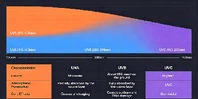
The wavelength of infrared light is 0.75μm-1000μm, which is between electromagnetic waves and visible light, and spreads out in the form of radiation. In industry, infrared rays with wavelengths of 0.75 μm to 1.5 μm are called near infrared rays, and infrared rays with wavelengths of 1.5 μm to 1000 μm are called far infrared rays. Far-infrared rays, like visible light, ultraviolet rays, and X-rays, are all electromagnetic waves, and they travel at the same speed, up to 300,000 kilometers per second. The important role of infrared rays is thermal effect.
The absorption spectrum of most organic matter and water is in the range of 2.5μm~25μm. When the wavelength of the radiation source is the same as that of the object being heated, the material is prone to absorb infrared rays. The wavelengths of far-infrared rays fall within this category. When the heat source temperature is in the range of 200℃~727℃, 80% of the total radiant energy will converge in the range of 2.5μm~15μm. 15μm higher, the energy is another 15% (200t) to 4% (600 ° C), and the radiant energy above 250 ° C is even less. It can be seen that most of the energy of far infrared rays is easily absorbed by matter.
After the molecules of the substance absorb infrared energy, the energy of the photon can be completely transformed into the vibration of the molecule, that is, the rotational energy; it can also change the rotational energy of the molecule. In addition, the vibration spectrum has the effect of broadening the vibration and rotation, which can expand the amplitude with the equilibrium position as the middle, and intensify the internal vibration. Because the activity of electrons and the vibration of molecules are at extremely high speeds, this activity constantly causes the vibrations of lattices and bonds to collide with each other. This change of activity state is like two fast-moving objects accelerate the friction and heat up, so the heating rate is fast. At the same time, when infrared radiation heats an item, it is based on the part where infrared radiation can penetrate, and its temperature is often higher than its appearance. For example, for corn kernels after infrared radiation, the internal temperature is measured to be 5°C-10°C higher than the external temperature. Therefore, the items heated by infrared radiation during dehydration and drying are in the simultaneous action of the temperature gradient and the humidity gradient of the inner high and the outer low, and the internal moisture is continuously transferred out and diffused and evaporated to achieve the purpose of rapid drying.
In industry, far-infrared heating has many advantages compared with hot air heating and drying: the baking time can be greatly shortened; the power consumption can be eliminated to 1/2~1/3; it can also greatly save space. Moreover, the application is convenient, the cost is low, the temperature control is convenient, the configuration is simple, the investment is small, and the production is easy