U.S. LED tube status
At the "2011 LEDS Conference" held in San Diego, California, US Department of Energy (DOE) Lighting Program Director Jim Brodrick as the first speaker gave a report entitled "The State of the US LED Industry and Market Forecasts". Jim Brodrick introduced in the report The successful technology of solid-state lighting (SSL) and the technical shortcomings that limit the use of LEDs in other applications.
Brodrick first introduced the Ministry of Energy's concern about SSL and the reasons for its investment in LED lighting technology. Quoting a report issued by the Ministry of Energy earlier this year, Brodrick said that if all 7 traditional lighting applications are replaced by LED lighting, it may save energy every year. 233 megawatt hours (TWh) of electricity-enough to support 19 million homes.
In the middle of the report, Brodrick introduced the situation of the SSL industry in the United States. When talking about LED lighting products, he introduced: "If you start from a blank sheet of paper to design and take out the product, it is really good." He also added that good The design must address all aspects of a luminaire, including LED chips, optics, electronics, thermal management, and mechanical design.
Brodrick said that LED applications in recessed downlight lighting, outdoor area lighting, 2x2 feet dark light tank lighting and refrigerated lighting are perfect, but LED applications are used in small retrofit lamps with only one bulb, linear replacement lamps and The performance of concave circular ceiling lighting is not so ideal.
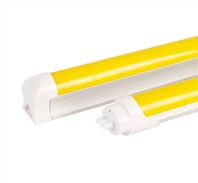
but. The linear 4-foot LED tube has been gradually improved, approaching the efficiency of the fluorescent lamp, but the light output and distribution of the directional LED is still not as good as the fluorescent lamp, which disperses the light into a whole cylindrical shape.
Despite this, Brodrick said, LED tubes will still be used in some applications due to their advantages in light output and cost, such as those hard-to-reach places that are suitable for longer-life LED tubes. He also said that LED tubes are still a good choice for areas where vibration and extreme weather occur frequently. Another example is those small retrofit lamps that only contain a light bulb. Brodrick said that although the technology used in LEDs is getting better and better, they are generally not as good as the light output, light color quality and light distribution of incandescent lamps.
Brodrick also introduced the recent test conducted by the Department of Energy: The Department of Energy purchased 33 LED light products for testing in eight large retail stores in the United States. The results showed that most of them failed to meet the basic performance parameters, and consumers were more satisfied with incandescent or halogen lamps. The lighting effect of the lamp.
In terms of color quality, Brodrick said that LED manufacturers have made significant improvements, and stricter classification is of great benefit to lighting manufacturers. The Department of Energy will continue its SSL multi-year work plan plan to increase lumen output and performance goals. In terms of efficiency, Brodrick said, we are striving to achieve the goal of 258 lumens per watt of cool white light by 2020.