Is Ultraviolet Radiation Effective for Mold Remediation?
In today's heightened focus on indoor environmental quality, mold contamination has emerged as a significant health concern. In response, Ultraviolet-C (UVC) radiation technology is gaining attention as a physical disinfection method. However, widespread confusion and misconceptions exist regarding its true efficacy, safety, and appropriate applications. This article systematically analyzes the scientific evidence behind UVC germicidal irradiation for mold inactivation, its mechanism of action, and the critical limitations for practical use.
How UVC Radiation Acts on Mold
To understand UVC's effect, one must first consider its target: mold spores. These resilient reproductive structures can survive harsh conditions. UVC light, particularly around the 254-nanometer wavelength, does not "poison" mold but works by damaging microbial DNA.
When mold spores are exposed to a sufficient UVC radiation dose, adjacent thymine bases within their DNA molecules absorb photon energy and form abnormal covalent bonds known as thymine dimers. This structural damage severely disrupts DNA replication and transcription, rendering the spores non-viable and inactive. Research published in Applied and Environmental Microbiology indicates that a 99.9% inactivation rate for common indoor molds like Aspergillus niger and Penicillium often requires a UV dose between 10,000 and 30,000 µJ/cm²-significantly higher than that needed for most bacteria [1].
It is crucial to note that mold hyphae (the filamentous structures) are more resistant due to their complex architecture and potential embedding within materials, explaining why UVC is effective against surface spores but inadequate for established, visible mold colonies.
UVC vs. Other Mold Remediation Methods
Choosing a remediation strategy requires balancing effectiveness, cost, safety, and practicality. The table below contrasts four primary approaches:
| Comparison Dimension | UVC Irradiation | Chemical Biocides | Ventilation & Humidity Control | Physical Removal |
|---|---|---|---|---|
| Mechanism of Action | Physical disruption of spore DNA | Chemical oxidation/destruction of cell structures | Alters the moist environment required for growth | Direct elimination of contaminated material |
| Primary Advantages | No chemical residue, rapid action, treats airborne spores | Fast results on surfaces, effective against hyphae and spores | Addresses root cause, low long-term cost, improves overall IAQ | Most definitive solution, immediately removes source |
| Key Limitations | Only effective on direct line-of-sight surfaces; useless on hidden/deep mold; safety hazards | Potential toxic VOCs, surface corrosion, poor penetration into porous materials | Does not eliminate existing growth; challenging in humid climates | Generates dust and spores (risk of cross-contamination); labor-intensive |
| Optimal Application Scenario | Disinfection of AHU coils,adjunctive treatment of smooth surfaces, biosafety cabinets | Small-scale treatment on non-porous, hard surfaces (tile, glass) | Foundational and preventive measure for all environments (basements, bathrooms) | Severely mold-porous building materials (drywall, carpet, ceiling tiles) |
| Professional Dependency | Medium to High (requires professional equipment, dose calculation, safety training) | Low to Medium (consumer products available, must follow safety protocols) | Low (can be implemented by occupant) | High (severe cases require professional mold remediation contractors) |
Efficacy and the "Dose" Concept
The answer to "Does UVC kill mold?" hinges entirely on the concept of "dose." The UV germicidal dose is the product of irradiance (intensity) and exposure time (measured in µJ/cm² or mJ/cm²). Mold spore inactivation requires a high dose due to their thick cell walls, potential protective pigments (e.g., melanin in Aspergillus niger), and general environmental resilience.
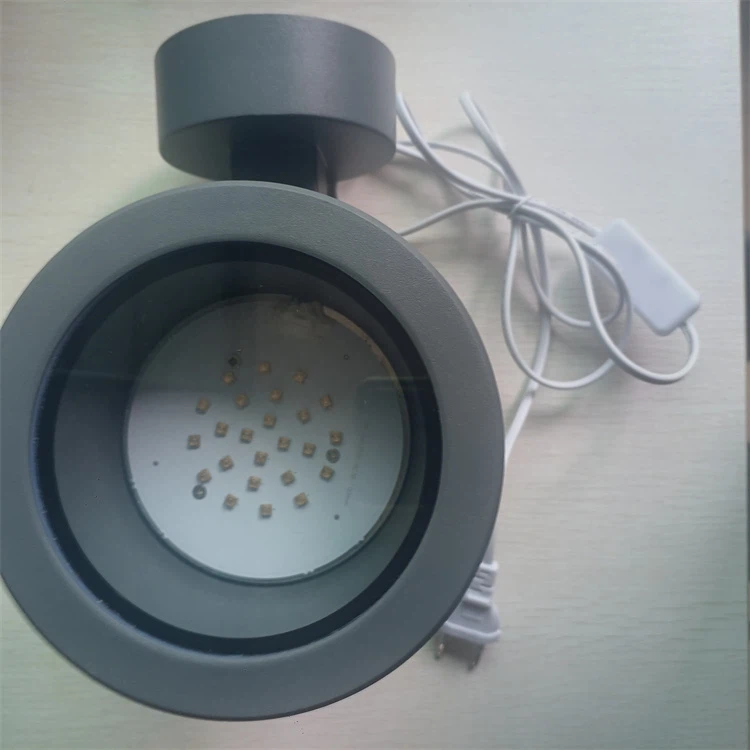
Hospital-grade high-intensity UVGI equipment is effective precisely because it delivers an extremely high UVC flux in a short time. For instance, mobile UVGI robots used for terminal room disinfection in hospitals may emit irradiance levels of several hundred µW/cm², capable of accumulating a lethal dose of tens of thousands of µJ/cm² within minutes. In contrast, common residential UVC lamps may have outputs a hundred times lower and, constrained by safety features like motion-sensing auto-shutoff, cannot accumulate an effective mold-killing dose in occupied spaces.
Furthermore, UVC's line-of-sight requirement and poor penetrating power are major practical constraints. It cannot bend around obstacles; dust, grime, or even a thin organic film can drastically reduce its intensity. This means any shadowed area, crevice, or mold growing within a substrate remains untreated. Consequently, the U.S. Environmental Protection Agency (EPA) explicitly states that UVGI is not a standalone solution for mold cleanup and must be integrated with source removal and moisture control [2].

Safety is Paramount
If considering UVC technology, prioritizing safety is non-negotiable:
Initial Professional Assessment: Hire a qualified indoor environmental quality professional to identify mold types, contamination extent, and moisture sources.
Select Compliant Equipment: Ensure devices carry relevant safety certifications (e.g., IEC 60335) and feature fail-safe mechanisms like occupancy sensors.
Enforce Strict Personal Protection: Evacuate all occupants and pets during operation. Trained operators must wear UVC-blocking eyewear and face shields.
Set Realistic Expectations: Understand that UVC primarily serves as a supplementary tool for airborne and surface spore control, not a replacement for removing moldy materials.
Conclusion
In summary, UVC technology is a physically grounded disinfection method with proven efficacy in inactivating airborne mold spores and surface contaminants under specific, controlled conditions. However, its "line-of-sight" nature renders it ineffective against hidden or established mold growth. For residential mold issues, the most effective strategy remains the combined approach of "Removal-Dry-Prevent": thoroughly removing contaminated porous materials, maintaining indoor relative humidity consistently below 60%, and fixing all moisture intrusions. Within this framework, UVC can serve as a valuable high-level auxiliary tool for maintaining air quality and treating hard-to-reach areas like HVAC systems. Consulting with occupational health specialists or certified mold remediation professionals is essential before deploying any high-intensity UVC device.
FAQ
Q1: Can commercially available "home UVC mold lamps" truly eliminate mold spots on walls?
A: Their effectiveness is highly limited. Residential-grade UVC lamps are low-power and often have timers or auto-shutoff features for safety, preventing the accumulation of a lethal dose. Crucially, visible mold spots consist of masses of hyphae and spores. UVC can only inactivate the most superficial spores, leaving the ingrained hyphal network and stains untouched. Wall deterioration, such as crumbling or peeling, still requires physical removal and repair.
Q2: What are the primary safety risks when using UVC lamps for indoor disinfection?
A: The main risks fall into two categories: direct exposure hazards and secondary pollution risks. UVC can cause photokeratitis (a painful eye injury) and skin burns; it must never be used in occupied spaces. Some lamps that emit 185nm wavelength light can generate ozone, a harmful respiratory irritant, requiring adequate ventilation. Additionally, UVC can degrade certain plastics, rubbers, and other materials over time.
Q3: If I hire a professional mold remediation company that uses high-intensity UVC, does that guarantee the mold problem is solved at its root?
A: Not necessarily; it depends on their overall protocol. Reputable mold remediation contractors use high-intensity UVGI primarily for "terminal disinfection" after physical removal of contaminated materials, aiming to eradicate residual airborne and surface spores-a high-standard supplementary step. However, the foundation of remediation is: 1) identifying and repairing the water source (leak, condensation), and 2) completely removing all non-cleanable, mold-porous materials (e.g., drywall, insulation). If disinfection is performed without addressing the moisture source and removing the contaminated substrate, mold regrowth is almost inevitable.

References
[1] Kowalski, W. (2009). Ultraviolet Germicidal Irradiation Handbook. Springer. This handbook provides a systematic review of UVGI inactivation dose data for various microorganisms, including mold spores.
[2] United States Environmental Protection Agency. Mold Remediation in Schools and Commercial Buildings. (EPA 402-K-01-001). This guide establishes physical removal as the primary method for mold cleanup and discusses the potential role of UVGI as an auxiliary tool.
[3] International Electrotechnical Commission. IEC 60335-2-109 *"Household and similar electrical appliances - Safety - Part 2-109: Particular requirements for UV radiation water treatment appliances."* While focused on water treatment, the safety principles (regarding防护, ozone limits) are highly relevant to air-disinfection devices.