The sun's inherent energy, known as ultraviolet radiation, travels to the earth as invisible rays. We get a suntan from these stimulating rays, which also provide essential vitamin D. Unfortunately, exposure to the sun without protection or for an extended period of time can harm our skin.
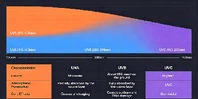
UVA, UVB, and UVC are the three kinds of UV radiation. Only UVA and UVB rays can reach our skin through the earth's atmosphere. What's up with the blue HEV light, which is also present? Continue reading to find out the answers.
Describe UVA.
95% of the total UV energy that reaches the planet is in the form of UVA photons. Deep penetration of UVA radiation by the skin can result in damage to the deeper layers of the skin and early indications of aging. Free radicals created by UVA radiation harm the skin's collagen and elastin fibers. Additionally, it is known that these free radicals are linked to skin cancer.
A smart method to remember UVA is to focus on the word "aging" when referring to skin.
Describe UVB.
The final 5% of UV energy that reaches the earth is made up of shorter UVB rays.
Sun exposure can result in sunburns because UVB rays only penetrate the top layer of our skin. The DNA in our skin cells is at danger of deterioration when exposed to UVB radiation without using sunscreen. This may result in DNA changes that ultimately may result in skin cancer.
When thinking of UVB, focus on the B, as in "Burning" the skin.
What is HEV light?
HEV light stands for high-energy visible light and is also called blue light. Like UVA and UVB rays, the HEV light primarily comes from the sun, and research shows, that they are just as damaging to the skin as UV rays. The blue light can penetrate the skin deeper than UV rays, why they play a major role in causing wrinkles, rough skin texture, and hyperpigmentation. It can be difficult to avoid the blue light completely, as you will be exposed to the light from your phone, computer and tablet, even after sunset.
It is essential that you nourish the skin with extra antioxidants that prevent the blue light’s free radicals, from damaging the skin.
When should you use sun protection?
Season, time of day, and location all affect how much UV radiation reaches our skin. The UV index can be used as a local indicator to determine when it is especially crucial to utilize sun protection. The UV index provides information about the intensity of UV radiation at a specific location and time. However, even with a low UV index, UV rays are still there and will harm your skin.
Karmameju SUN will protect your skin all year round.
When spending time in the sun, it's critical to protect our skin from UVA and UVB rays. Some people only wear sun protection when in the sun, while others do so throughout the summer, autumn, winter, and spring. The frequency with which you choose to protect your skin from the sun depends on your own preferences even though we are exposed to UV radiation all year round. Because the skin-aging UVA radiation can pass through windows and clouds, you may benefit from protecting your face and décolletage skin all year round.

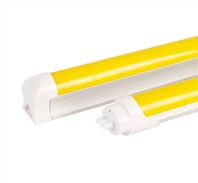
Benwei UV 120cm led tube black light Product Specification:
|
Item |
UV led light tube bulb T8 |
|
Input Volt |
AC85-265V |
|
Power |
10W,18W,24W |
|
Length |
60cm/2ft, 120cm/4ft, 150cm/5ft |
|
Bean Angle |
120°, 180° |
|
Lifespan |
50000 hrs |
|
Wavelength |
365nm 395nm 254nm 280nm |
|
Warranty |
3-5 years |