Wall Packs vs. Flood Lights: Understanding Key Differences in Outdoor Lighting
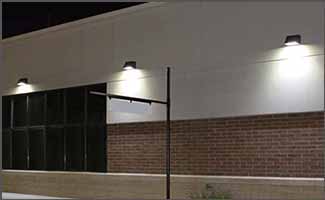
Outdoor lighting serves as both a functional necessity and a safety-critical component, illuminating spaces ranging from building exteriors and walkways to parking lots and sports fields. Among the most widely used outdoor fixtures are wall packs and flood lights, yet their distinct designs and purposes often lead to confusion during selection. While both aim to brighten outdoor areas, they differ dramatically in optical design, light distribution, installation methods, and ideal applications. Understanding these differences is essential for businesses, municipalities, and homeowners to invest in lighting solutions that meet their specific needs – whether prioritising targeted security, wide-area coverage, or energy efficiency. This article breaks down the core distinctions between wall packs and flood lights, from their engineering to real-world use cases.
1. Core Design and Optical Focus

The fundamental difference between wall packs and flood lights lies in their design intent: wall packs are engineered for directional, task-specific illumination, while flood lights are built for broad, diffused coverage.
Wall packs are compact, low-profile fixtures designed to mount directly on vertical surfaces – typically building walls, columns, or entryways. Their optical systems are optimised for downward and outward light projection, with most models featuring shielded lenses or angled reflectors that minimise upward glare and light trespass. This design ensures light is focused where it's needed most: along walkways, near doors, or around building perimeters. Many wall packs also include cut-off designs (per IESNA standards) to comply with dark-sky regulations, reducing light pollution by limiting upward light emission to less than 10%. Construction-wise, they often have a slim, rectangular form factor to blend with architectural aesthetics, with housing made from corrosion-resistant aluminium or polycarbonate to withstand outdoor elements.
Flood lights, by contrast, are robust, high-output fixtures designed to "flood" large areas with light. Their optical systems prioritise wide beam angles – ranging from 60° to 180° – and diffused light distribution, achieved through convex lenses, parabolic reflectors, or multiple LED arrays. Unlike wall packs, flood lights are not limited to vertical mounting; they can be pole-mounted, ground-mounted, or ceiling-mounted, with adjustable brackets to direct light across expansive spaces. Their housing is bulkier to accommodate larger heat sinks (critical for high-lumen LEDs) and often features a more industrial design, with IP65+ waterproof ratings to handle harsh weather. Floodlights prioritise raw brightness over precision, with lumen outputs ranging from 5,000 to 100,000+ lumens, compared to wall packs' typical 1,000–20,000 lumen range.
2. Light Distribution and Beam Characteristics

Light distribution patterns are where wall packs and flood lights diverge most sharply, directly impacting their suitability for different tasks.
Wall packs produce a narrow to medium beam angle (usually 30°–90°) with a focused, asymmetrical pattern. This means light is concentrated in a specific zone – for example, a 50° beam angle from a wall pack mounted above a doorway will illuminate the steps below and a 10–15 foot radius around the entry, without wasting light on adjacent landscaping or the sky. Many wall packs offer "asymmetrical cutoff" designs, where light is projected more horizontally than vertically, making them ideal for lighting pathways parallel to a building. This targeted distribution also enhances security by eliminating dark corners near entry points, where intruders might hide. Additionally, wall packs often have lower glare ratings (UGR ≤ 22) due to their shielded design, making them suitable for areas where pedestrian comfort is a priority, such as apartment complex walkways or retail shopfronts.
Flood lights deliver a wide, symmetrical beam (90°–180°) that covers large, open areas uniformly. A floodlight with a 120° beam angle mounted on a 20-foot pole can illuminate a 50×50 foot parking lot section with consistent brightness across the entire area. For even larger spaces – like sports fields or industrial yards – multiple floodlights with overlapping beams create seamless coverage. Unlike wall packs, floodlights prioritise horizontal uniformity (U1 ratio ≤ 3:1) to ensure there are no dark spots, a critical factor for safety in parking lots or construction sites. However, this wide distribution can lead to higher glare (UGR 25–30) if not properly shielded, which is why many industrial flood lights include anti-glare louvres for worker comfort. Some floodlights also offer interchangeable lenses to adjust beam angles (e.g., 60° for focused loading docks and 180° for open yards), adding versatility absent in most wall packs.
3. Installation Requirements and Placement
Installation methods and placement are dictated by each fixture's design and purpose, with wall packs requiring minimal space and flood lights often needing structural support.
Wall packs are designed for surface mounting on vertical structures, requiring only a flat, stable wall or column. Installation is straightforward: most models come with pre-drilled mounting holes and can be wired directly to a standard electrical junction box. Their compact size (typically 6–12 inches in height) means they don't require additional support, making them ideal for spaces with limited clearance, such as under eaves or above narrow doorways. Some wall packs also offer "knuckle mounts" for slight angle adjustments (up to 30°), but their primary placement is fixed to vertical surfaces. Weather resistance is still critical – most wall packs have IP65 or IP66 ratings – but their sheltered position (under eaves, for example) often reduces exposure to direct rain or snow compared to floodlights.
Flood lights demand more flexible mounting options due to their need for wide coverage. The most common installation is pole mounting, using adjustable brackets that allow tilting (up to 180°) and swivelling (360°) to direct light precisely. Pole heights range from 10 feet (for small parking lots) to 50+ feet (for sports stadiums), requiring structural reinforcement to support the fixture's weight (often 10–30 pounds). Ground mounting is another option for temporary use (e.g., construction sites), using weighted bases to stabilise the fixture. Ceiling mounting is common in covered areas like parking garages, where flood lights are suspended to illuminate multiple parking bays. Installation often requires professional electricians and, for tall poles, lift equipment – adding to upfront costs but necessary for optimal light distribution. Flood lights also need higher IP ratings (IP66 or IP67) due to their exposure to direct weather, with some models featuring anti-corrosion coatings for coastal or industrial environments.
4. Ideal Applications and Use Cases
The distinct strengths of wall packs and flood lights make them suited for entirely different outdoor lighting needs, from intimate walkways to sprawling industrial sites.
Wall packs excel in perimeter and access-point lighting, where targeted illumination enhances security and convenience. Key applications include the following:
Building exteriors: Lighting entry doors, loading docks, and emergency exits in offices, warehouses, and apartment complexes.
Walkways and pathways: Illuminating sidewalks, staircases, and garden paths adjacent to buildings, with low glare to prevent pedestrian trips.
Retail shopfronts: Highlighting signage and entrance areas to attract customers while deterring theft.
Residential exteriors: Lighting porch steps, garage doors, and backyard patios, often paired with motion sensors for energy efficiency.
In these scenarios, wall packs' compact design, targeted light, and low glare make them superior to flood lights, which would waste energy and create unwanted brightness.
Flood lights are the go-to choice for large-area and high-brightness needs, where uniform coverage is critical. Typical applications include the following:
Parking lots and garages: Illuminating multi-space parking areas to reduce accidents and theft, with brightness levels (50–100 lux) meeting ANSI/IESNA standards.
Sports fields and courts: Providing 200–750 lux for tennis, soccer, or basketball, with wide beams and high CRI (≥80) to enhance player performance.
Industrial yards and construction sites: Delivering intense light (100–200 lux) for nighttime operations, with durable designs to withstand dust and debris.
Landscaping and architectural lighting: Highlighting large trees, monuments, or building facades using coloured LEDs or adjustable beams for aesthetic effect.
In these cases, floodlights' high lumen output and wide coverage make them indispensable – wall packs would be too dim and narrowly focused to meet the demand.
5. Energy Efficiency and Maintenance Considerations
While both fixtures now use LED technology for efficiency, their operational costs and maintenance needs differ based on usage and design.
Wall packs, with their lower lumen output (1,000–20,000 lumens) and targeted distribution, are highly energy-efficient. A 20W LED wall pack (1,800 lumens) consumes 75% less energy than an 80W halogen wall pack while lasting 25 times longer (50,000+ hours vs. 2,000 hours). Maintenance is minimal: their shielded design protects internal components from dust and moisture, and their mounted position (on walls) makes replacement easier than flood lights. For a business with 20 wall packs running 8 hours daily, annual energy costs are typically \(50–\)100, with no bulb replacements needed for 10+ years.
Flood lights, despite higher wattages (30W–600W+), are still efficient compared to traditional metal halide models. A 300W LED flood light (36,000 lumens) uses 60% less energy than a 1,000W metal halide flood light and lasts 5 times longer (50,000+ hours vs. 10,000 hours). However, their higher output means higher energy costs: It costs about $200 to $300 a year to run ten 300W floodlights for 12 hours a day. Maintenance is more involved: pole-mounted flood lights require lifts for replacement, and their exposed position makes them more prone to damage from wind or debris. Premium floodlights with heat sinks and surge protection (10kV+) reduce failures, but upfront costs are higher ($200–$600 vs. $50–$200 for wall packs).
6. Compliance and Regulatory Considerations
Both fixtures must adhere to lighting regulations, but their design differences affect compliance with standards like dark-sky rules and energy codes.
Wall packs are inherently compliant with dark-sky regulations (e.g., International Dark-Sky Association guidelines) due to their cutoff designs, which limit upward light to <10%. This makes them mandatory in residential areas and historic districts where light pollution is restricted. They also meet energy efficiency standards like ENERGY STAR, with most LED models exceeding 100 lumens per watt. In some regions, wall packs with motion sensors are required for exterior lighting to reduce unnecessary energy use.
Flood lights, with their wide beams, are more likely to violate dark-sky rules if unshielded. Many jurisdictions now require "full-cutoff" flood lights for outdoor use, which limit upward light to <5%. Industrial flood lights must also comply with OSHA standards for workplace lighting (e.g., 100 lux for construction sites), while sports flood lights must meet governing body requirements (e.g., ITF 500 lux for tennis tournaments). Energy codes like Title 24 (California) set minimum efficacy standards (≥110 lumens per watt) for flood lights, driving the shift from metal halide to LED models.
Conclusion
Wall packs and flood lights are both essential outdoor lighting tools, but their designs and purposes are irreplaceable for specific needs. Wall packs shine in targeted, low-glare applications – securing building perimeters, illuminating walkways, and enhancing entry points – with compact designs and energy-efficient operation. Floodlights dominate in large-area, high-brightness scenarios – lighting parking lots, sports fields, and industrial sites – with wide beams and robust construction.
The key to choosing between them lies in assessing three factors: the size of the area to illuminate, the required light precision, and installation constraints. For small, defined spaces near vertical surfaces, wall packs are the practical choice. For large, open areas needing uniform coverage, flood lights are indispensable. By understanding these differences, users can invest in lighting that balances performance, efficiency, and compliance, ensuring outdoor spaces are safe, functional, and cost-effective for years to come.
https://www.benweilight.com/industrial-lighting/100w-full-cut-off-led-wall-pack-light-wall.html
Together, we make it better.
Shenzhen Benwei Lighting Technology Co., Ltd.
Mobile/WhatsApp: (+86)18673599565
Email: bwzm15@benweilighting.com
Skype: benweilight88
Web: www.benweilight.com
Add: F Building, Yuanfen Industrial Zone, Longhua, Bao'an District, Shenzhen, China