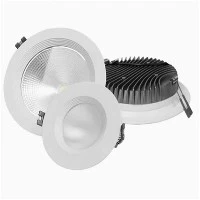
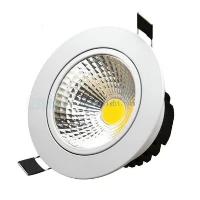
Why are modern poultry farms phasing out traditional lighting and switching entirely to LED?

1. The Global Lighting Revolution: LED Has Taken Overwhelming Dominance
The global lighting market is undergoing a profound transformation. According to industry data, the total lighting market reached approximately USD 151.7 billion in 2024, of which the LED lighting market accounted for USD 94.5 billion. From 2025 to 2034, the LED lighting market is expected to grow at a robust compound annual growth rate of 10.4%, potentially reaching USD 251.5 billion by 2034. As the world's largest manufacturing and consumer market for LED lighting, China's LED market is projected to reach RMB 350 billion in 2025.
This growth trend is underpinned by LED technology's comprehensive superiority over conventional lighting in luminous efficacy, lifespan, energy consumption, and other core performance indicators.
2. LED vs. Traditional Lighting: Core Parameter Comparison
| Parameter | Incandescent | Fluorescent (CFL) | LED |
|---|---|---|---|
| Luminous Efficacy (lm/W) | 10‑15 lm/W | 50‑70 lm/W | 100‑200 lm/W |
| Power Required for Equivalent Brightness | 60W | 12W | 7W |
| Average Lifespan | 1,000 hours | 8,000‑10,000 hours | 30,000‑50,000 hours |
| Energy Efficiency | 10%‑20% | - | >80% |
| Energy Consumption (relative) | 100% (baseline) | ~20% | ~10% |
The table clearly shows: LEDs offer more than 10 times the efficacy of incandescent lamps and 2‑3 times that of fluorescent lamps; their lifespan is 30‑50 times longer than incandescent and 3‑5 times longer than fluorescent. This means that for the same lighting requirement, LEDs consume far less electricity and require drastically fewer replacements.
3. Poultry‑Specific LED Lighting: More Than Energy Saving – A Productivity Tool
Conventional lighting in poultry houses mainly serves the purpose of "seeing" the birds. Modern LED poultry lighting, however, addresses the question of "how to make chickens grow better and lay more eggs."
3.1 Scientific Basis of Spectral Regulation
Studies show that different light wavelengths produce distinctly different physiological effects on poultry:
Blue‑green light (short wavelengths) : stimulates broiler growth and promotes weight gain.
Orange‑red light (long wavelengths) : enhances reproductive performance and improves egg‑laying efficiency.
Red light has been shown to play a significant role in regulating laying performance and sexual maturation in hens. Research indicates that longer‑wavelength light more effectively stimulates avian extra‑retinal photoreceptors, promoting reproduction. Hens raised under red LED light exhibit more active ovarian activity while consuming less feed. Combined with the inherent low energy consumption of LEDs, this achieves a dual reduction in farming costs.

3.2 Verified Production Data
| Research Case | Improvement Observed |
|---|---|
| Free‑range egg farm in Powys, UK (16,000 hens) | Egg production rate increased by 6.1%, generating an additional £27,192 annual revenue |
| Red‑LED‑reared laying hens | Significantly higher laying rate and better feed conversion ratio (FCR of 1.89 at 30 weeks) |
| LED retrofit (replacing 964 tubes) | Energy consumption reduced by 48.8%, annual CO₂ emissions cut by 14.96 tonnes |
| Modernisation of poultry house lighting systems | Hatchability improved by 4‑5% |
These data prove conclusively: poultry‑specific LED lighting is not a cost, but an investment – it directly boosts production efficiency while saving energy.
4. Economic Analysis: ROI of LED Lighting
Take a medium‑sized poultry farm (replacing 500 tubes) as an example:
| Item | Traditional Fluorescent (36W) | Benwei LED Tube (18W equivalent) |
|---|---|---|
| Single‑unit power | 36W | 18W |
| Daily consumption (12h/day) | 0.432 kWh | 0.216 kWh |
| Annual consumption for 500 units | 78,840 kWh | 39,420 kWh |
| Annual electricity cost ( RMB 0.6/kWh) | $ 6,758 | $3,379 |
| Annual electricity savings | - | $ 3,379 |
| Lifespan | 10,000 h (~2.3 years) | 50,000 h (~11.4 years) |
| Replacement cycles over 10 years | ~4‑5 times | ~1 time |
In electricity alone, over $ 3,286 can be saved each year. When factoring in reduced lamp purchases, labour costs for replacements, and the increased egg production from spectral optimisation, the payback period is typically within 6‑12 months.
5. Conclusion
Returning to the opening question: Why are modern poultry farms phasing out traditional lighting and switching entirely to LED?
The answer is now crystal clear:
Energy saving – cuts energy use by ~50% compared to fluorescent and ~90% versus incandescent.
Long life – up to 50,000 hours, 5 times longer than fluorescent and 50 times longer than incandescent.
Higher productivity – scientifically tuned spectra can boost laying rates by over 6% and hatchability by 4‑5%.
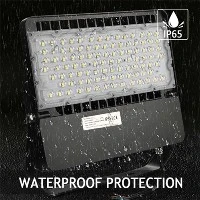
Reliability – IP67 waterproofing and a 5‑year warranty make them suitable for the harshest poultry environments.
Return on investment – short payback periods and substantial long‑term benefits.
LED poultry lighting has moved far beyond being a mere "lighting tool" – it is now a core technology for improving production efficiency and lowering operating costs in modern farming. For any sustainable poultry enterprise, the question is no longer "whether to switch" but "when to switch."
We warmly invite you to contact us for a customised farm lighting upgrade proposal and a free sample trial. Our engineering team is ready to provide one‑on‑one spectrum customisation and ROI calculations, helping you achieve maximum output at the lowest cost. Get in touch today!
✨Contact✨
🙋♀️Harriet
📫Email: bwzm88@benweilighting.com
📞Whatsapp: +8613007285242