The market for commercial lighting is dominated by LED panel lights. An increasing number of LED manufacturers have expanded their investment in the panel light market segment due to the growing demand for commercial lighting. The price of panel lights continues to decline due to excessive investment, which encourages more people to purchase this product but also leads to fierce rivalry. Many manufacturers simply employ low-quality, inexpensive materials to lower the price of lamps in an effort to draw in customers. As a result, over the last two years, the number of quality complaints about LED panel lights has increased. The yellowing of the panel lights' surfaces is one of the most dangerous of these. We'll talk about why the LED panel light goes yellow today as well as how to prevent and fix this problem.
What is the light on the LED panel?
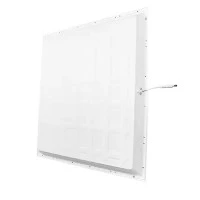
The comparatively thin LED panel light resembles a flat board. Aluminum serves as its frame, and LED chips and light guide materials are used to produce light. Conventional fluorescent lighting fixtures can be swapped out for it. Backlit LED panels and edge-lit LED flat panel lights are currently the most common types available on the market.
The edge-lit LED light panel is mostly to blame for the panel lights' yellowing issue.

What is the construction of an edge-lit LED panel light?
Outside frame. The outside frame is typically made of aluminum, while some subpar manufacturers on the market also employ plastic to mimic the aluminum frame. Additionally, the shell serves as the primary conduit for the LED chip's heat dissipation in the panel.
LED chips. SMD2835 lamp beads typically consume 0.2W or 0.5W per piece in LED panel lights. It has a theoretical lifespan of more than 50,000 hours. good-quality lamp beads have low luminous degradation and good luminous efficiency.
Diffuser plate. It primarily works with the light guide plate to evenly direct light onto it. It can also block the light guide plate's network point and keep dust from contaminating it.
Illuminated guidance plate. Its primary purpose is to evenly export light from the front by refracting the light coming from the side LEDs through its own dots. Numerous materials are available, including PS and PMMA light guiding plates. 1.0T, 1.2T, 1.5T, 2.0T, 3.0T, and so on are The thicknesses. It is a crucial component of edge-lit LED flat lights.
Paper that is reflective. To increase light efficiency, reflect the remaining light onto the rear of the light guide plate, which is often made of RW250.
PE cotton. It works similarly to the reflecting paper mentioned above for LED ceiling panels.
Metal rear plate. The primary purpose is to seal the LED panel light, which is typically made of galvanized sheet and may also contribute to heat dissipation.
Driver in the lead. The primary driving power supply is currently separated into two parts: the isolated driving power supply and the non-Isolated power supply. One of the most common concerns from customers about panel lights, or the lighting industry as a whole, is drive power.
What is the operation of the edge-lit LED panel light?
The side-emitting LED panel light changes the direction of light propagation to provide downward illumination by using the light generated by the LED chips on the side to illuminate the light guide plate with protrusions or pits at the bottom.
The light guide plate plays a crucial part in this process. A high-quality light guide plate will produce soft, consistent light.
Three distinct causes for the yellowing of LED panel lights
yellowing brought on by the light guide plate's own material change
Yellowing is caused by aberrant LED chips, primarily phosphor issues.
Yellowing results from the stains that are affixed to the light guide plate penetrating the surface due to the external use environment.

Yellowing brought on by the light guide plate's own material change
In addition to being the most prevalent and significant yellowing issue in the market, this is our actual yellowing quality issue. A yellow patch will show up in the center of the ultra-thin panel light's light-emitting surface when it is turned on. This issue is caused by the PS material light guide plate.
Polystyrene is PS's full name. In petrochemicals, it is a translucent brittle glue that is comparatively low level. It only has a specific gravity of 1.047–1.049. The light transmittance is 87% when it is completely transparent. It is a plastic's refractive index, which is surpassed only by a PC. the substance that is second most transparent. The PS light guide plate will be significantly less expensive than the PMMA light guide plate, but it is more susceptible to weather-related yellowing and brittleness at severely cold temperatures.
Yellowing is caused by aberrant LED chips, primarily phosphor issues
Most of this happened in or around 2010. Some panel lights at the time became yellow as a result of illegal businesses cutting shortcuts using LED technology. After turning on, some LED panel lights that were initially 5000–6500k cold white produce all or a portion of their light with a yellowish and reddish hue. The primary causes of this issue are the phosphor utilization ratio and chip packing method of LED chips.
The stains adhered to the light guide plate are penetrated by the external use environment, resulting in yellowing
The diffuser plate, which is the outermost layer, serves as both a homogeneous light path and a barrier against dust and debris that could contaminate the light guide plate. In actual use, however, many consumers will overlook the impact of the external environment on the lamp's internal structure, particularly in some unique use settings like chemical factories, laboratories, and bathrooms and toilets that are frequently filled with water vapor. Through the side of the panel light, the unique air components in these areas have a tendency to slowly seep into the interior of the lamp body, contaminating the light guide plate and resulting in yellowing. For instance, water vapor's long-term corrosion of the diffuser will also result in the panel light's surface turning yellow.
How can LED flat panel light yellowing be prevented?
Yellowing brought on by an issue with the light guide plate itself
Only a brand-new LED panel light can take its place.
Ask the LED panel light supplier about the type and specifications of the light guide plate before making a purchase; the more specific, the better. A PMMA light guide plate with laser dots is the optimum type. Even after more than six years of use, the LED panel light made from this material won't turn yellow. (Our 2014 PMMA panel light is still in excellent condition. to labor). Second, you have the option of selecting a PS-based panel light that has anti-UV and anti-yellowing properties. This type of light guide plate is particularly treated on PS. It is more costly than PMMA light guide plate and usually doesn't yellow significantly for three years. Reduced. Naturally, new backlit LED panel lights are replacing edge-lit panel lights in the market today. Backlit panel lights are less expensive than side-lit ones and do not have a light guide plate built into the structure, which also solves the main issue of light guide plate yellowing.
For the color temperature yellowing brought on by LED chips
To solve this issue, we can swap out the internal lamp beads. Or swap it out for a brand-new LED panel light.
Yellowing brought on by the outside environment
There are often two circumstances. We can use low-concentration industrial alcohol to wipe the diffuser's surface to change the yellowing case if the yellowing is solely the result of external dust or water stains that have been adhered to the diffuser's surface for an extended period of time, like a non-waterproof panel light installed in the bathroom. The light guide plate inside the lamp body has yellowed for the outdoor usage environment, and the panel light can only be changed in its entirety.
The usage of subpar raw materials, particularly subpar light guide plates, is the main cause of LED panel lights that quickly become yellow. Choosing PMMA light guide panel lights or backlit LED panel lights without light guide plates are the two main ways to prevent this issue. However, regardless of the type of panel lights, they must be in the proper Please choose IP44 or IP65 waterproof and moisture-proof panel lights for usage in certain areas, including restrooms or toilets, to prevent water stains and vapor corrosion of the lamps' internal circuits.


Our address
No. 5-3 Niujiao Road, Yanchuan Community, Yanluo Street, Bao'an District, Shenzhen
Phone Number
+86 18659785153
bwzm04@ledbenweilighting.com