Advanced Thermal Management in LED Lighting

Introduction
In the competitive global LED lighting market, thermal management remains a critical factor determining product performance, longevity, and reliability. Effective heat dissipation directly impacts lumen maintenance, color stability, and overall lifespan of LED systems. Recent research from Nanjing University of Science and Technology reveals groundbreaking advancements in crossed-fin heat sink technology that promise to revolutionize thermal performance in high-power LED applications. This article examines these technological breakthroughs and their practical implications for international buyers and project specifiers seeking superior lighting solutions.
The Thermal Challenge in Modern LED Systems
LED technology has transformed the lighting industry with its exceptional energy efficiency and longevity. However, approximately 70% of electrical energy in LEDs is converted to heat rather than light. Without proper thermal management, this heat accumulation leads to accelerated lumen depreciation, color shifting, and ultimately premature failure. Traditional cooling solutions often face limitations in balancing performance, weight, and manufacturing complexity, creating a persistent challenge for lighting manufacturers worldwide.
Crossed-Fin Technology: A Paradigm Shift in Heat Dissipation

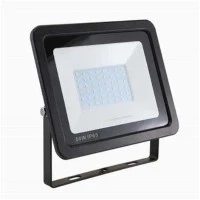
The research focused on a 100W LED stage floodlight and demonstrates that crossed-fin heat sinks represent a significant advancement over conventional parallel-fin designs. This innovative configuration features shorter fins arranged perpendicularly between longer main fins, creating a complex network that enhances thermal performance through multiple mechanisms:
Enhanced Airflow Management: The crossed-fin structure disrupts thermal boundary layer development that typically insulates traditional fin surfaces. This disruption increases the average convective heat transfer coefficient by 0.563 W/(m²·K) compared to standard parallel-fin designs.
Optimized Fluid Dynamics: Computational fluid dynamics analysis reveals that crossed-fin configurations facilitate bottom-to-top airflow through multiple channels, preventing the formation of stagnant hot air pockets that plague conventional designs.
Superior Temperature Reduction: Implementation of crossed-fin technology reduced the maximum LED chip temperature by 2.42°C under identical operating conditions, a crucial improvement for long-term reliability.
Scientific Optimization Process
The research team employed sophisticated engineering methodologies to maximize the technology's potential:
Single-Factor Parameter Analysis
Initial investigations identified optimal ranges for short-fin length and spacing. The study demonstrated that both parameters exhibit optimal values beyond which performance degrades:
Excessively short fin spacing (below 8 mm) restricts airflow, reducing convection efficiency
Overly long short fins (beyond 65mm) transform into ineffective "long fins" with diminished performance
The optimal short fin length was identified at approximately 65mm with spacing around 11mm

Multi-Objective Optimization Framework
Using the NSGA-II (Non-dominated Sorting Genetic Algorithm II) approach, researchers balanced two competing objectives: minimizing LED chip temperature and reducing heat sink mass. This process generated Pareto-optimal solutions representing the best possible compromises between these goals.
Application-Specific Configuration Clustering
Through fuzzy C-means clustering analysis, the optimization results were categorized into three distinct application scenarios:
Maximum Cooling Performance (Cluster 1): Prioritizes thermal management above weight considerations, achieving a minimum temperature of 76.02°C.
Balanced Performance (Cluster 2): Optimizes both temperature and mass, reducing chip temperature by 2.33°C with only a 0.014 kg mass increase.
Minimum Weight Configuration (Cluster 3): Emphasizes lightweight design while maintaining improved thermal performance, achieving a 1.71°C temperature reduction with minimal mass.
Practical Implications for Commercial Lighting
The research findings have significant implications for commercial and industrial LED applications:
Enhanced Product Longevity
Each 10°C reduction in junction temperature can potentially double LED lifespan. The 2.33°C improvement demonstrated through optimization translates to substantial extensions in product service life, reducing replacement frequency and total cost of ownership.
Maintained Luminous Efficacy
Superior thermal management prevents the efficiency droop phenomenon, where LED efficacy decreases at elevated temperatures. This ensures consistent light output and color quality throughout the product's operational life.
Design Flexibility
The availability of application-specific configurations allows lighting manufacturers to tailor thermal solutions to particular market segments without over-engineering or compromising performance.
Implementation in Commercial Products

Progressive manufacturers like Shenzhen Benwei Lighting have incorporated these research insights into their product development process. Their high-power LED floodlights and stage lighting products now feature optimized crossed-fin heat sinks that deliver:
Enhanced thermal performance for maximum reliability
Balanced weight and cooling efficiency for installation flexibility
Robust construction suitable for demanding environments
Extended lifespan with consistent performance
Conclusion: The Future of LED Thermal Management
The research from Nanjing University of Science and Technology establishes crossed-fin heat sink technology as a superior solution for high-power LED thermal management. Through sophisticated optimization methodologies, this approach delivers measurable improvements in cooling performance while offering flexibility for diverse application requirements.
For international buyers, specifiers, and lighting professionals, these advancements translate to products with enhanced reliability, longer service life, and superior performance consistency. As LED technology continues to evolve, innovative thermal management solutions like crossed-fin heat sinks will play an increasingly crucial role in unlocking the full potential of solid-state lighting across commercial, industrial, and specialized applications.
References
[1] Liu, W., Lu, X., & Lin, J. (2024). Thermal Analysis of LED Floodlight Crossed-Fin Heat Sink and Optimization. Semiconductor Optoelectronics, 45(2), 234-241.
[2] Yalcin, H., Baskaya, S., & Sivrioglu, M. (2008). Numerical analysis of natural convection heat transfer from rectangular shrouded fin arrays on a horizontal surface. International Communications in Heat and Mass Transfer, 35(3), 299-311.
[3] Deb, K., Pratap, A., Agarwal, S., et al. (2002). A fast and elitist multi-objective genetic algorithm: NSGA-II. IEEE Transactions on Evolutionary Computation, 6(2), 182-197.
Our service:
1. Your inquiry related to our products or prices will be replied to in 24 hours.
2. Well-trained and experienced staff to answer all your inquiries in fluent English.
3. OEM & ODM: We can help you to design and put into product.
4. Distributorships are offered for your unique design and some of our current models.
5. Protection of your sales area, ideas of design, and all your private information.
Shenzhen Benwei Lighting Technology Co., Ltd.
Telephone: +86 0755 27186329
Mobile (+86) 18673599565
WhatsApp: 19113306783
Email: bwzm15@benweilighting.com
Skype: benweilight88
Web: www.benweilight.com